
 I have loved mushrooms since childhood, and I have also been a programmer for a long time. Combining these two hobbies, I wrote this website. Previously, I had two other mushroom identification sites, which I sold. Only one of them remains accessible today. My goal with the current site is to create an easy-to-use search and identification platform that works great both in the field and at home. I hope it brings joy to others.
Bartha László
Species flashcards
Practice area: created for the 303-species Hungarian mushroom inspector requirement. It is not an official examination; requirements in other countries may differ.
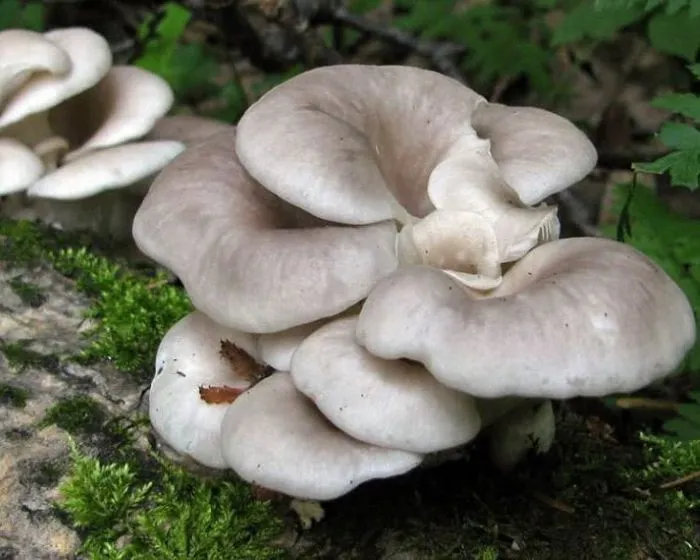
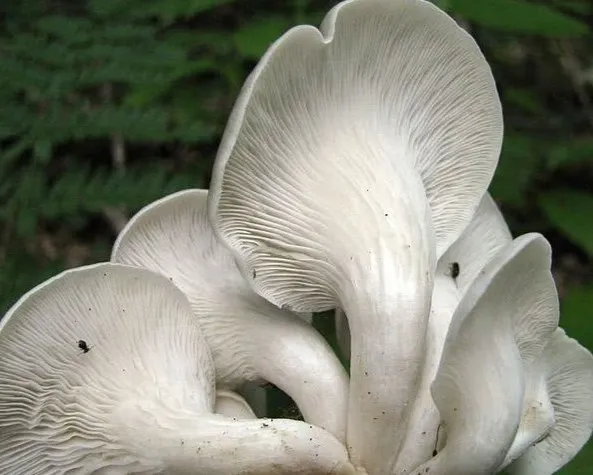
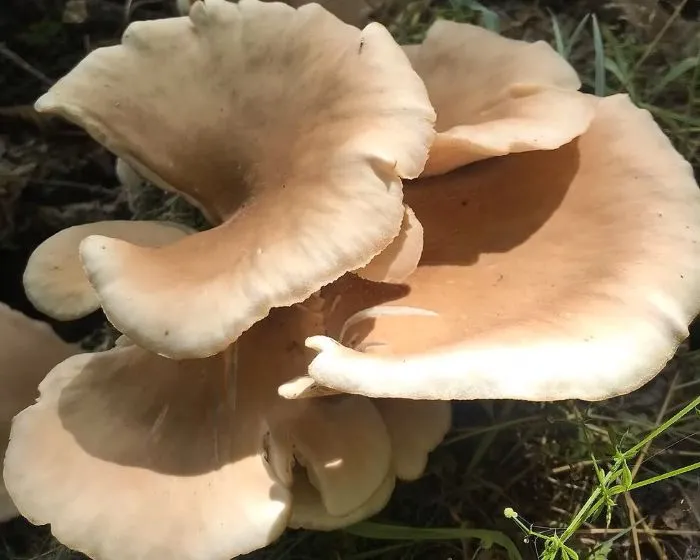
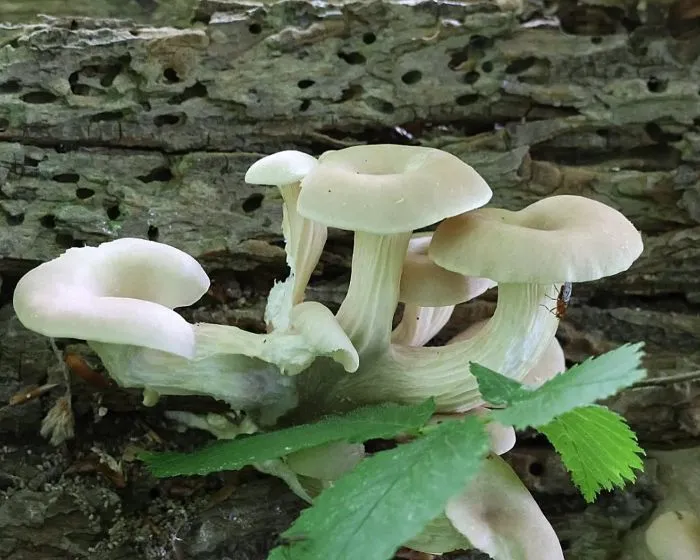
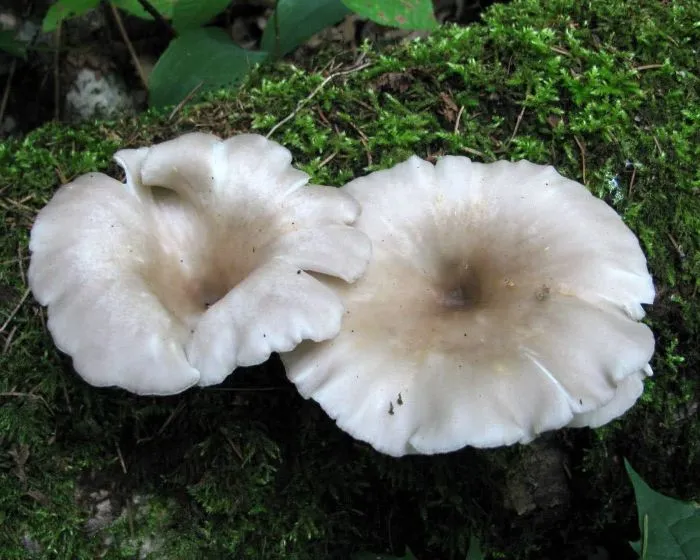
Branching oyster mushroom
Pleurotus cornucopiae
edible
- Habitat: deciduous forest
- Fruiting season: April – July
- Cap: half-side funnel-shaped smooth
- Stem: cylindrical smooth
- Fertile layer: decurrent dense standing
Description
Fruiting body: Usually growing in clusters, often in dense tufts. The cap is 4–12 cm across, convex at first, later funnel- or shell-shaped, with an inrolled margin for a long time. Whitish to pale cream when young, later yellowish to ochre-brown; surface smooth.
Fertile layer: The gills are white to cream, crowded, deeply decurrent down the stem and form a conspicuous network of cross-veins there.
Stem: 2–12 cm tall and 0.5–2 cm thick, whitish, cylindrical and usually lateral to slightly central. The fruitbodies in a cluster often arise from a shared stem base.
Flesh: White, soft and elastic when young, becoming tougher with age. The smell may be sweet, aniseed-like and floury; taste mild and floury.
Spores: Spore print white; spores elongate ellipsoid, smooth, 8–12 × 3.5–5.5 µm.
Occurrence: A saprotrophic species fruiting from April to July on trunks, stumps and larger branches of dead broadleaf trees, usually in clusters. It is uncommon in Hungary.
Edibility: Edible, although its characteristic sweet aniseed smell is not enjoyed by everyone.
Lookalikes: Similar to the oyster mushroom. The branching oyster mushroom has gills that run farther down the stem and are distinctly connected by cross-veins there.
Note: The epithet cornucopiae derives from the Latin for cornucopia, or horn of plenty, and refers to the funnel- or horn-like shape of the fruitbodies.
Species description: First described by Jean-Jacques Paulet and transferred to Pleurotus by Léon Louis Rolland in 1910.
Taxonomy
- PhylumBasidiomycota
- ClassAgaricomycetes
- OrderAgaricales
- FamilyPleurotaceae
- GenusPleurotus
- Species: Pleurotus cornucopiae
- Synonym: Pleurotus sapidus
- Authority: Jean-Jacques Paulet and Léon Louis Rolland (1910)
- English name: Branching oyster mushroom
- Ecological status: saprotrophic
- Edibility: edible
