Mycelium and nutrient uptake
A network of hyphae releases digestive enzymes over a large area, then absorbs dissolved nutrients and water.
A fungus is more than its visible fruiting body: its mycelium in soil, wood or among roots is constantly connected with its environment.
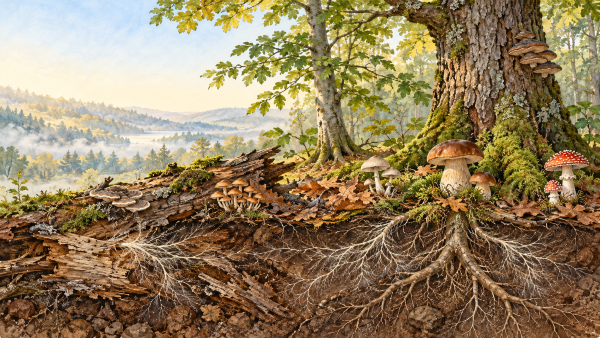
Roots, decaying wood, leaf litter, water and temperature together shape where and when a species produces fruiting bodies.
The fruiting body is a short-lived, visible reproductive structure; the longer-lived active body is usually the mycelium.
A network of hyphae releases digestive enzymes over a large area, then absorbs dissolved nutrients and water.
With suitable moisture, temperature and a developed mycelium, fruiting-body formation can begin. It differs by species and habitat.
Spores are usually carried by air, sometimes by water or animals. Details of spore formation are in the morphology module.
Open morphology moduleFungi use ready-made organic compounds. Their type of association determines which habitat and associated organisms to look for.
Always read a habitat through several clues together: host plants, substrate, soil and microclimate.
A fruiting-season entry marks a common time window, not a calendar promise. The weather of a given year and the habitat condition can be decisive.
The aim is not to repeat collection rules, but to build a reliable observation routine.
For a more detailed overview of morphological features, fertile layers and spore formation, return to the Morphology and taxonomy module.
Mushroom Portal was created to provide reliable mushroom knowledge quickly and for free, without annoying ads.
If we helped you identify a mushroom or if you use the site regularly, for the price of a coffee ☕ you can support our server costs and independence.

 I have loved mushrooms since childhood, and I have also been a programmer for a long time. Combining these two hobbies, I wrote this website. Previously, I had two other mushroom identification sites, which I sold. Only one of them remains accessible today. My goal with the current site is to create an easy-to-use search and identification platform that works great both in the field and at home. I hope it brings joy to others.
Bartha László
If you have any questions about the site or would like to report an error, feel free to contact me.
