
 I have loved mushrooms since childhood, and I have also been a programmer for a long time. Combining these two hobbies, I wrote this website. Previously, I had two other mushroom identification sites, which I sold. Only one of them remains accessible today. My goal with the current site is to create an easy-to-use search and identification platform that works great both in the field and at home. I hope it brings joy to others.
Bartha László
Species flashcards
Practice area: created for the 303-species Hungarian mushroom inspector requirement. It is not an official examination; requirements in other countries may differ.

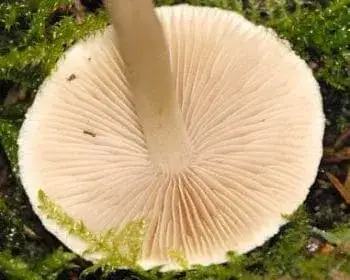
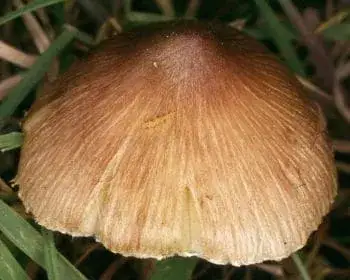
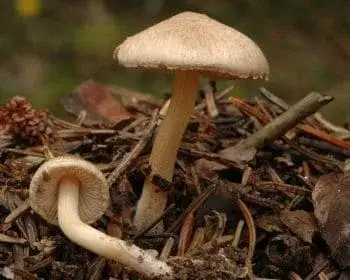
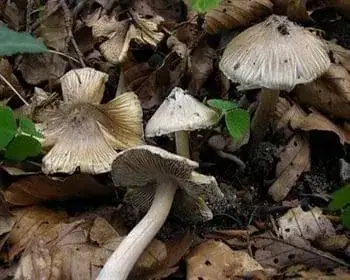
Split Fibrecap
Inocybe rimosa
poisonous
- Habitat: deciduous grassy
- Fruiting season: June – October
- Cap: flat conical fibrous cracked
- Stem: cylindrical
- Fertile layer: curved adnate dense smooth
Description
Cap: Conical, small, 2-10 cm wide. Strongly radially fibrous, at the edges mostly cracked like flower petals. Color brownish-yellow or yellowish-brown, but can be straw-yellow or grayish-brown. Its margin is connected to the stem by a veil when young.
Gills: Pale grayish-yellowish, then grayish-brownish, brownish. Spores brownish-yellow, elongated kidney-shaped.
Stem: Straight, evenly thick, long compared to the cap, 2-10 cm and 0.5-1.5 cm thick. The stem base is often bulbous. Color whitish or pale yellowish, pale brownish. Often covered with small, white granules above the cap.
Flesh: Whitish, thin in the cap, brittle, soft watery. Also brittle in the stem, mostly pale brownish.
Spore: Dull brown; 9-12 x 4.5-7µm; elliptical, smooth, bean-shaped.
Occurrence: In gardens, under bushes, but also in forests, shady, damp places from spring to late autumn. Common everywhere, but mostly singly, solitary, although sometimes appears in groups.
Edibility: Generally unpleasant smell and sweetish-bitterish taste. Poisonous, symptoms typical of fibrecap poisoning, often very severe.
Confusion: Similar to many rarer fibrecap species, primarily its close relatives, for example the bulbous fibrecap, but they are also poisonous. Poisonings often occur with the garden fibrecap because it is confused with the fairy ring champignon. Its distinguishing features are that the fairy ring champignon's cap is not radially fibrous-grooved, its gills are sparsely standing and the same color as the cap, not darker, and its stem is tough, not brittle, soft. The fairy ring champignon is also characterized by its good smell. It is more similar to the yellow fieldcap, from which it differs mainly by the fibrous-grooved surface of its cap. It can resemble the grey tricholoma, but its cap is blackish-gray and its gills are whitish. The garden inkcap's gills, on the other hand, turn black and that mushroom grows in dense groups.
Note: Inocybe means - fibrous head, while rimosa comes from the Latin adjective rimosus, meaning - full of cracks or fissures.
Species description: In 1789, the French naturalist Jean Baptiste Francois (Pierre) Bulliard described this mushroom scientifically as Agaricus rimosus. In 1871, the German mycologist Paul Kummer transferred this species to the Inocybe genus, when it received its currently accepted scientific name in the form Inocybe rimosa. It has numerous synonyms, including Inocybe fastigiata, by which many still know it.
Taxonomy
- PhylumBasidiomycota
- ClassAgaricomycetes
- OrderAgaricales
- FamilyCortinariaceae
- GenusInocybe
- Species: rimosa
- Described by: (Bull.: Fr.) P. Kumm.
- Hungarian name: kerti susulyka
- Lifestyle: mycorrhizal
- Edibility: poisonous
