
 I have loved mushrooms since childhood, and I have also been a programmer for a long time. Combining these two hobbies, I wrote this website. Previously, I had two other mushroom identification sites, which I sold. Only one of them remains accessible today. My goal with the current site is to create an easy-to-use search and identification platform that works great both in the field and at home. I hope it brings joy to others.
Bartha László
Species flashcards
Practice area: created for the 303-species Hungarian mushroom inspector requirement. It is not an official examination; requirements in other countries may differ.

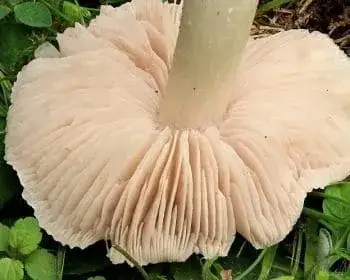
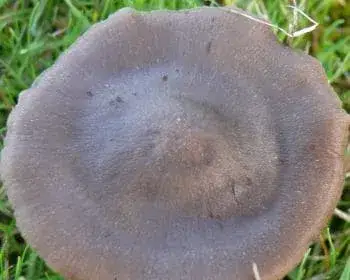
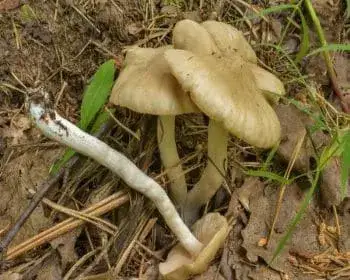
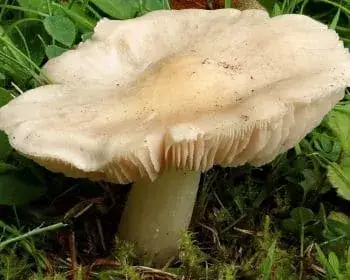
Shield Pinkgill
Entoloma clypeatum
edible
- Habitat: deciduous grassy
- Fruiting season: April – June
- Cap: flat conical umbonate fibrous infolded cracked wavy
- Stem: cylindrical tapering club-shaped
- Fertile layer: adnate decurrent tooth dense smooth
Description
Cap: Bluntly conical, pointed in the center, wavy at the margin, not infrequently slightly crooked. 3-16 cm large, rather thin-fleshed. Color variable, whitish-grayish, grayish-brownish, greenish-gray, yellowish-brownish, but always radially patterned, fibrous, striated, shiny. Its margin is not infrequently cracked. Its surface is sometimes tile-like cracked.
Gills: Densely standing, adnate, sometimes slightly tooth-decurrent. Initially whitish-grayish, later slowly pinkish, finally brownish-flesh-colored.
Stem: Cylindrical, often tapering upwards, 4-15 cm long, 0.5-2 cm thick. Often curved, and sometimes twisted. Fibrous-strings, but quite brittle. Color white, whitish or possibly similar to the cap. Its surface is fibrous, striated.
Flesh: Soft, fibrous-strings in the stem, hollowing. Color whitish-gray. Smell strongly, sometimes unpleasantly floury and floury taste.
Spore: Pink; 9-11 x 7.5-10µm; five or seven-angled.
Occurrence: Early spring mushroom. Appears at the end of April, and in May it appears in masses locally, but in smaller numbers it may reappear in autumn. In orchards, gardens, forest edges, bushy pastures, forest clearings, mostly in grassy-bushy places. Found only under plum family trees (plum, apricot, blackthorn, etc.) and hawthorn, because it is mycorrhizal with them.
Edibility: Edible, but not first-class. Known in many places, and consumed together with the St. George's mushroom. However, later than May, even a good mushroom expert should not pick it, as it can be confused with several poisonous mushrooms.
Confusion: Among the poisonous mushrooms, it is strikingly similar to the livid pinkgill, but its gills are yellowish when young, mostly larger, in forests, later in the season. The gray or greenish-gray-capped wood pinkgill is also very similar to the shield pinkgill, but it is smaller, more fragile and differs in habitat. The shield pinkgill can resemble the poisonous garden fibrecap, but its gills are not pinkish, but grayish-brown, and the poisonous deadly fibrecap, although its gills also eventually become grayish-brown, reddish-brown, and the whole mushroom reddens. Among the edible mushrooms, superficially it resembles the St. George's mushroom, which is strikingly thick-fleshed, white-capped and white-gilled. Also similar to it is the spring pinkgill.
Note: Many edible pinkgill descriptions are found in the literature, but even the best description does not rule out the possibility that an inexperienced collector might confuse it with similar poisonous relatives. clypeatus means shield-like.
Species description: This impressive mushroom was scientifically described in 1753 by Carl Linnaeus, who gave it the name Agaricus clypeatus. Then the mycologist Paul Kummer reclassified this species into the current genus in 1871, so its binomial scientific name became Entoloma clypeatum. Since then, several varieties have been recognized, so its official nomenclatural (primary) form is Entoloma clypeatum f. clypeatum. (L.) P. Kumm.
Taxonomy
- PhylumBasidiomycota
- ClassAgaricomycetes
- OrderAgaricales
- FamilyEntolomataceae
- GenusEntoloma
- Species: clypeatum
- Described by: (L.) P. Kumm.
- Hungarian name: tövisaljagomba
- Lifestyle: mycorrhizal(?), biotrophic parasite(?)
- Edibility: edible
