
 I have loved mushrooms since childhood, and I have also been a programmer for a long time. Combining these two hobbies, I wrote this website. Previously, I had two other mushroom identification sites, which I sold. Only one of them remains accessible today. My goal with the current site is to create an easy-to-use search and identification platform that works great both in the field and at home. I hope it brings joy to others.
Bartha László
Species flashcards
Practice area: created for the 303-species Hungarian mushroom inspector requirement. It is not an official examination; requirements in other countries may differ.

Woodland Marasmius
Marasmius wynneae
edible
- Habitat: deciduous coniferous grassy
- Fruiting season: May – November
- Cap: flat smooth grooved
- Stem: cylindrical
- Fertile layer: free thick smooth
Description
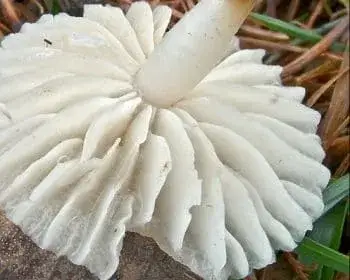
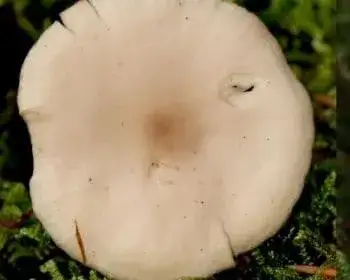
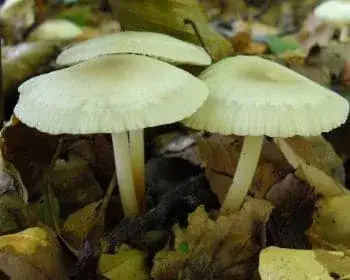
Cap: Small, 1-6 cm wide, initially convex, later flat. Color whitish, but can be pinkish, lilac, grayish or blackish. Its margin is mostly grooved in old age.
Gills: Sparsely standing, not decurrent, white, sometimes pale yellowish or brownish. Spore print white.
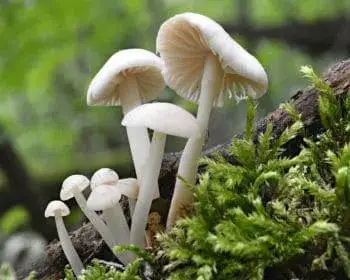
Stem: Slender, straight, rigid, 3-8 cm long, 2-5 mm thick. Whitish-yellow on top, gradually darker downwards, reddish-brown in the middle, lilac-black at the base. Usually slightly grouped, 3-6 specimens grow together.
Flesh: Whitish, thin in the cap, elastic, firm, very tough in the stem.
Spore: White, or cream-colored; (7.0-)7.5-9.0 x (3.5-)4.0-6.5 µm; smooth and slightly teardrop-shaped.
Occurrence: In forests on the ground, on rotting leaves, in small groups, in groups. In summer and autumn, common in many places.
Edibility: Similar to the fairy ring champignon, clove-smelling. Good edible mushroom, which - although small - is worth collecting. Most suitable for soup.
Confusion: Among the poisonous mushrooms, the fool's funnel, the small white funnel and the frosty funnel are similar, but their gills are densely standing and decurrent. It differs from all of them by its smell and its dark-colored, tough stem at the base. It is distinguished from the fairy ring champignon by its whitish color and habitat. The equally edible oak-loving gymnopus has densely standing gills.
Note: marasmius comes from the Greek word marasmos, meaning withered, weakened.
Species description: From 1859, the current name is attributed to Miles Joseph Berkeley(1803-1889) and Christopher Edmund Broome(1812-1886).
Taxonomy
- PhylumBasidiomycota
- ClassAgaricomycetes
- OrderAgaricales
- FamilyMarasmiaceae
- GenusMarasmius
- Species: wynneae
- Described by: Berk. & Broome
- Hungarian name: erdei szegfűgomba
- Lifestyle: soil saprotroph
- Edibility: not edible
