
 I have loved mushrooms since childhood, and I have also been a programmer for a long time. Combining these two hobbies, I wrote this website. Previously, I had two other mushroom identification sites, which I sold. Only one of them remains accessible today. My goal with the current site is to create an easy-to-use search and identification platform that works great both in the field and at home. I hope it brings joy to others.
Bartha László
Species flashcards
Practice area: created for the 303-species Hungarian mushroom inspector requirement. It is not an official examination; requirements in other countries may differ.

Caesar's Mushroom
Amanita caesarea
edible
Protected · 5 000 Ft
- Habitat: deciduous
- Fruiting season: June – October
- Cap: hemispherical flat smooth grooved
- Stem: cylindrical
- Fertile layer: free dense fringed
Description
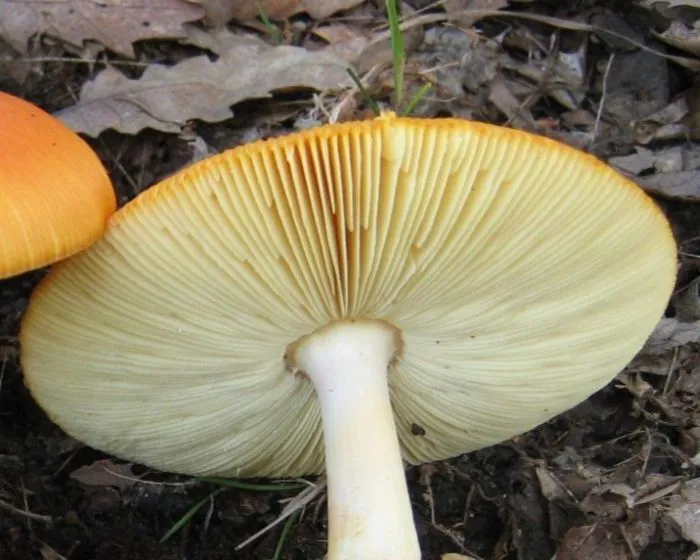
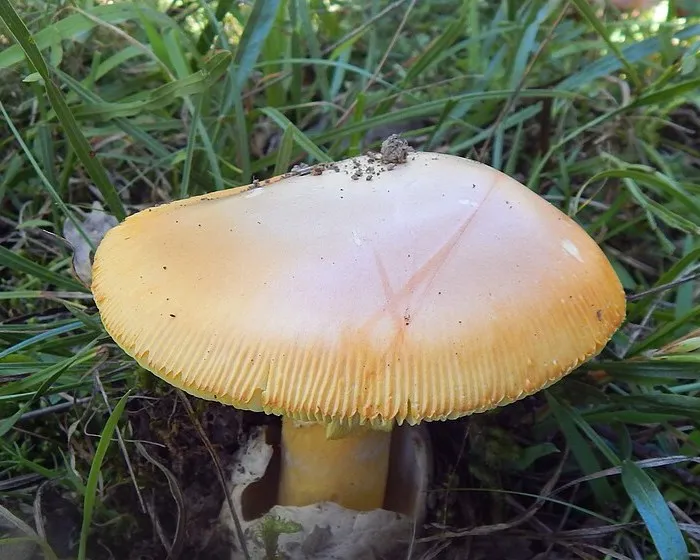
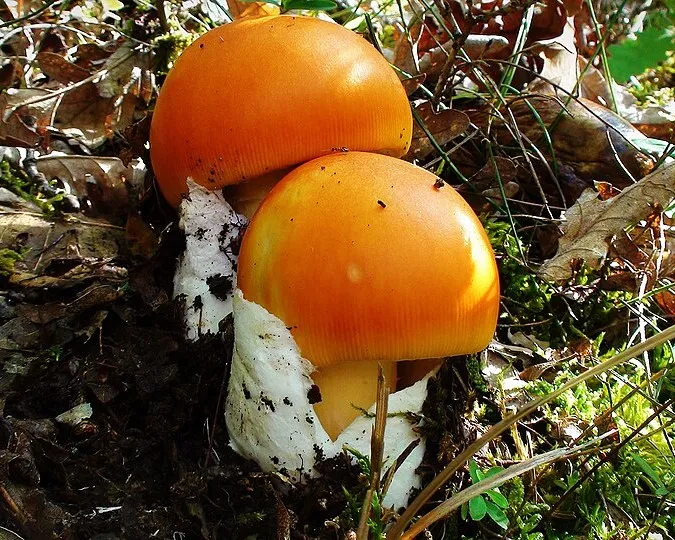
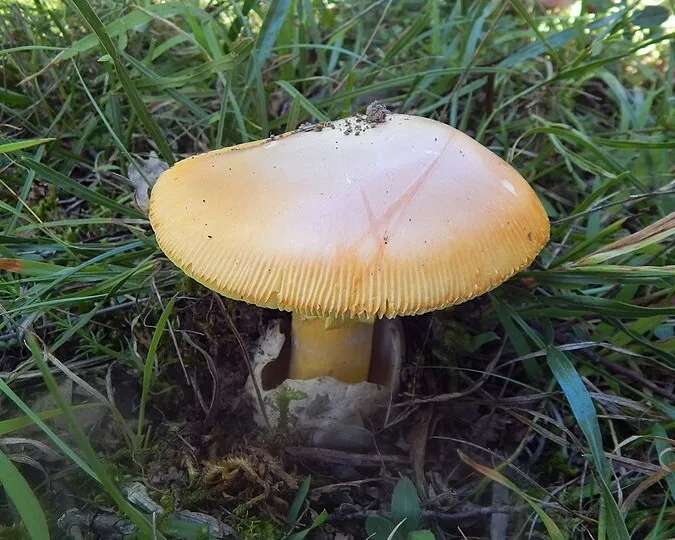
Cap: Hemispherical to convex, later spreading, 5-20 cm wide. Orange-red but can be fiery red or yellow, with sometimes large, white veil remnants sticking to the top. Its margin is finely grooved. The skin is peelable.
Gills: Pale yellow, later bright lemon yellow, not decurrent, wide, especially at the cap margin.
Stem: Cylindrical, solid, bulbous at the base, 8-15 cm long, 2-3 cm thick. Yellow, lemon yellow or golden yellow. Its ring is also yellow, large, hanging, finely grooved on top. At the edge of the bulb there is a large, thick, spreading, white, wide, sack-like volva, whose upper edge splits into several points.
Flesh: Soft, yellowish-white, yellowish-red under the cap skin, and white in the middle and base of the stem. Good-tasting, mildly pleasant smell.
Spore: White; (8)-9-12-(14) x 6-7-(8) µm; oval, egg-shaped.
Occurrence: Mostly in oak forests, sweet chestnut groves, but always near trees, as it is mycorrhizal. It also occurs in coniferous forests and among hazel bushes. Prefers warmer, dry, clayey soils, as it is a mushroom of warmer regions. In warmer years, it can appear in masses locally, but generally it is not common. Appears from June to October, mainly in August.
Edibility: Good-tasting, edible, popular and sought-after mushroom. Known since ancient Roman times and one of the most highly valued mushroom species. Very tasty and can be prepared in many ways. Good for canning, salads and drying. The yellow color released during cooking nicely colors the dish.
Confusion: Its bright yellow stem and gills distinguish it from all similar amanitas in a striking and unmistakable way. The poisonous fly agaric has white gills and stem. Russulas of similar color have no ring or volva, their stem is not yellow, and their flesh is snapping brittle.
Note: The Caesar's mushroom was highly valued by Roman emperors even in ancient times, hence its name. When young, it can be the size of a duck egg, wider at the top, completely closed, in a thick, white veil.
Species description: Giovanni Antonio Scopoli first described it in 1772, and initially it was named Agaricus caesareus. (Most gilled mushrooms initially belonged to the Agaricus genus.) In 1801 Christiaan Hendrik Persoon transferred it to the new Amanita genus under the name Amanita Caesarea.
Taxonomy
- PhylumBasidiomycota
- ClassAgaricomycetes
- OrderAgaricales
- FamilyAmanitaceae
- GenusAmanita
- Species: caesarea
- Described by: (Scop.) Pers.
- Hungarian name: császárgalóca, császárgomba
- Lifestyle: mycorrhizal
- Edibility: edible
