
 I have loved mushrooms since childhood, and I have also been a programmer for a long time. Combining these two hobbies, I wrote this website. Previously, I had two other mushroom identification sites, which I sold. Only one of them remains accessible today. My goal with the current site is to create an easy-to-use search and identification platform that works great both in the field and at home. I hope it brings joy to others.
Bartha László
Species flashcards
Practice area: created for the 303-species Hungarian mushroom inspector requirement. It is not an official examination; requirements in other countries may differ.
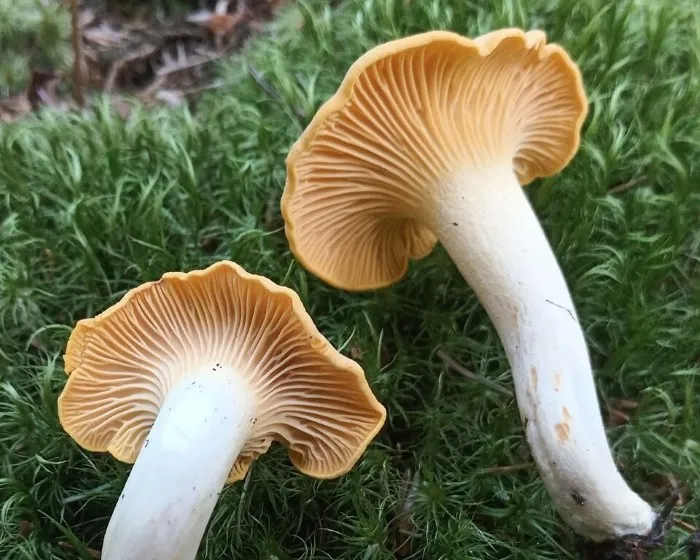
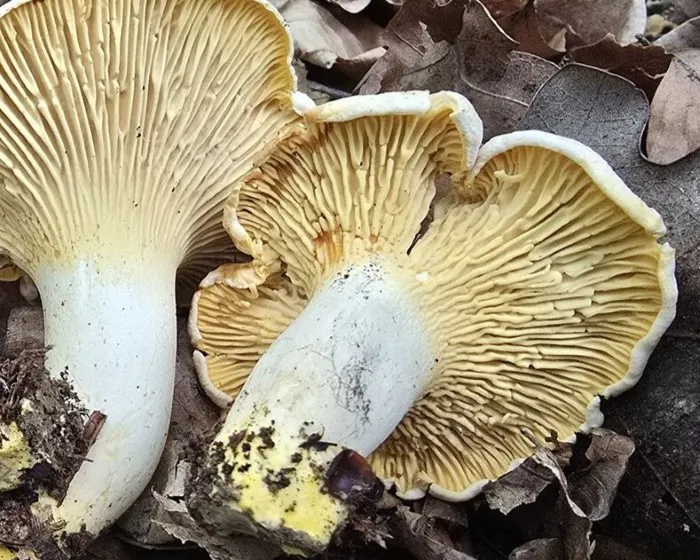
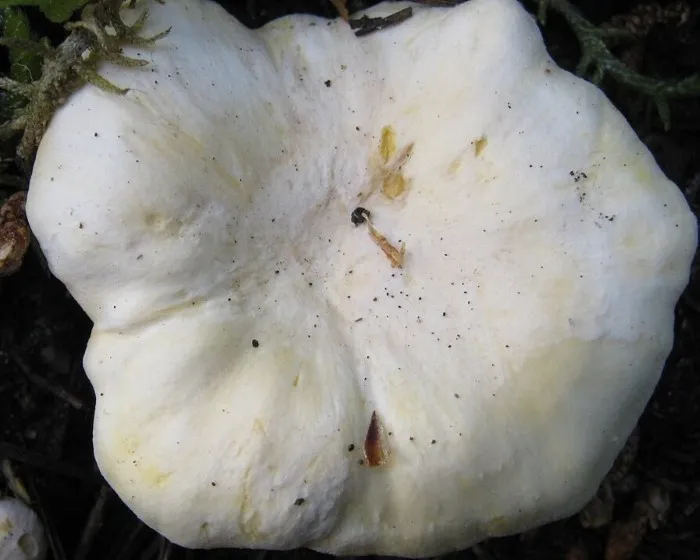
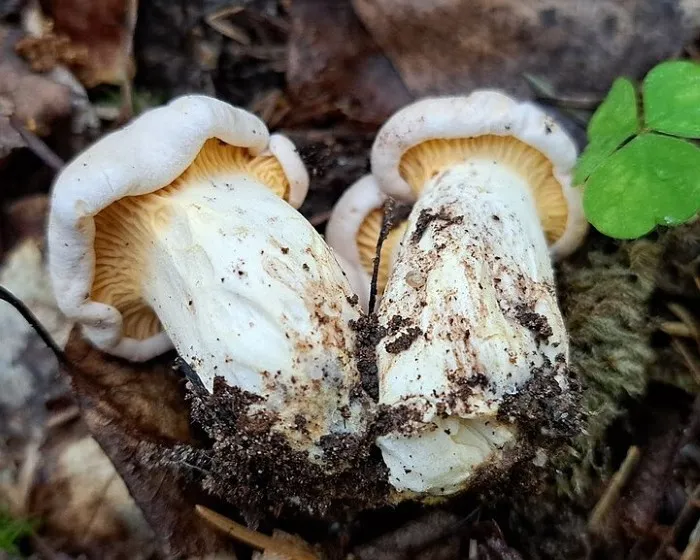
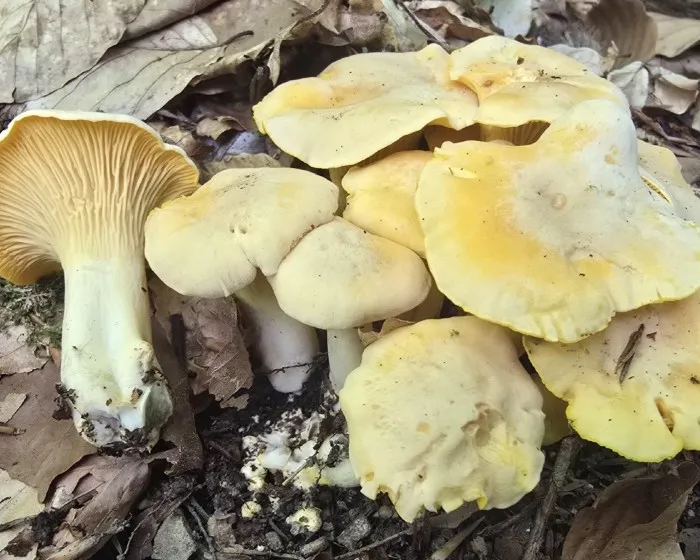
Pale chanterelle
Cantharellus pallens
edible
- Habitat: deciduous
- Fruiting season: May – November
- Cap: funnel wavy
- Stem: cylindrical
- Fertile layer: veined decurrent forked
Description
Fruitbody: Differentiated into cap-like and stem-like parts. The cap is 3–10 cm across, convex when young, later flattening and finally funnel-shaped. Its margin is irregularly wavy and its colour whitish, pale yellow or cream-yellow. Usually larger and fleshier than golden chanterelle.
Fertile layer: The underside has blunt, veined, decurrent and forked ridges. Pale yellow to almost whitish.
Stem: 3–8 cm long, cylindrical, usually slightly tapering towards the base and solid. The same colour as the cap or a little paler.
Flesh: Whitish to pale cream, thicker and fleshier than that of golden chanterelle. Smell pleasantly fruity and taste mild.
Spores: Spore print whitish to pale cream; spores 8–10 × 5–6 µm, elliptical and smooth.
Occurrence: A mycorrhizal species of less acidic deciduous woodland, especially beneath beech and oak. Fruits from May to November and is locally common in Hungary.
Edibility: Edible, with culinary value equal to golden chanterelle.
Lookalikes: Most easily confused with golden chanterelle. The pale chanterelle is paler, often nearly whitish, and usually has a larger, fleshier fruitbody.
Note: Cantharellus derives from the Ancient Greek 'kántharos', a deep two-handled drinking cup, with the Latin diminutive ending '-ellus', referring to the funnel- or cup-shaped fruitbody. Pallens is the present participle of Latin 'palleo', meaning becoming pale or fading.
Species description: Albert Pilát described the species as Cantharellus pallens in 1959.
Taxonomy
- PhylumBasidiomycota
- ClassAgaricomycetes
- OrderCantharellales
- FamilyCantharellaceae
- GenusCantharellus
- Species: Cantharellus pallens
- Authority: Pilát (1959)
- English name: Pale chanterelle
- Ecological status: mycorrhizal
- Edibility: edible
