
 I have loved mushrooms since childhood, and I have also been a programmer for a long time. Combining these two hobbies, I wrote this website. Previously, I had two other mushroom identification sites, which I sold. Only one of them remains accessible today. My goal with the current site is to create an easy-to-use search and identification platform that works great both in the field and at home. I hope it brings joy to others.
Bartha László
Species flashcards
Practice area: created for the 303-species Hungarian mushroom inspector requirement. It is not an official examination; requirements in other countries may differ.
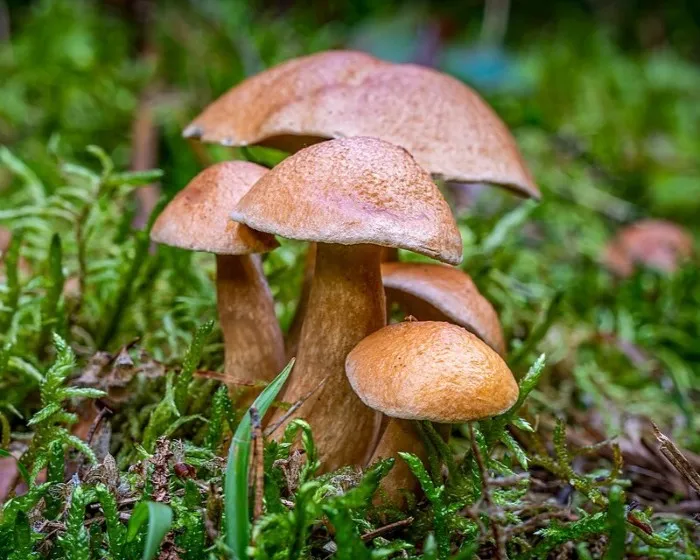
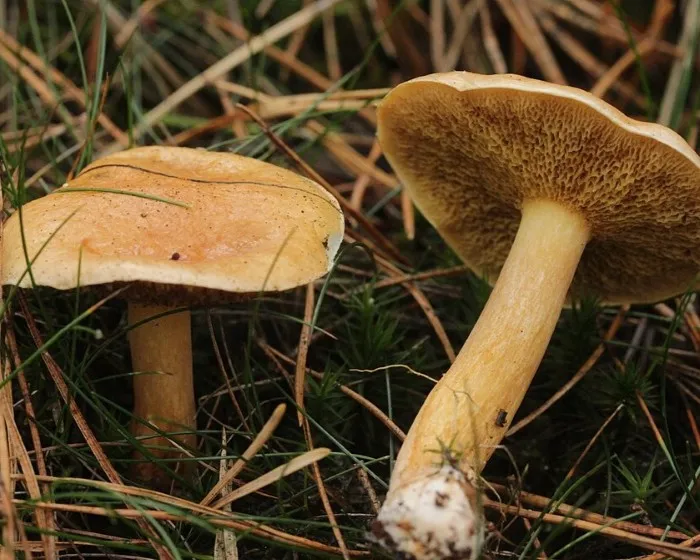
Bovine bolete
Suillus bovinus
edible
- Habitat: coniferous
- Fruiting season: July – October
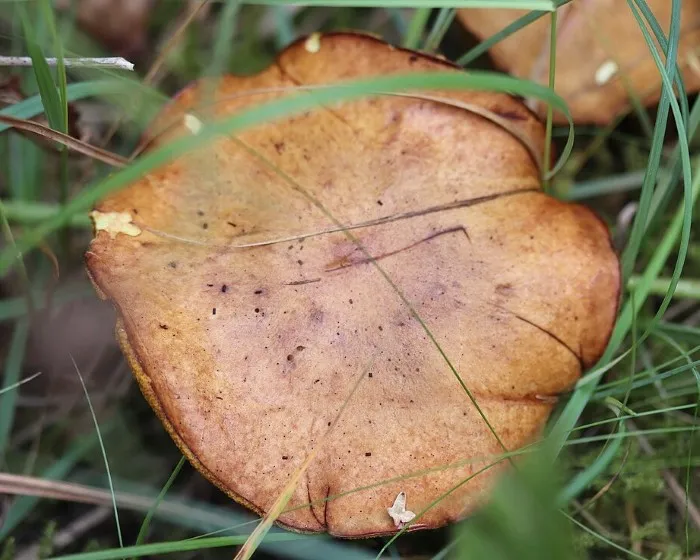
- Cap: convex spreading wavy slimy
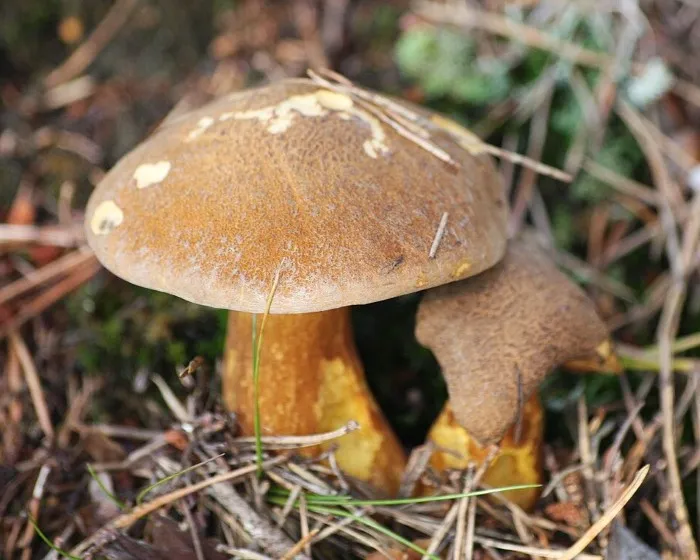
- Stem: cylindrical tapering smooth
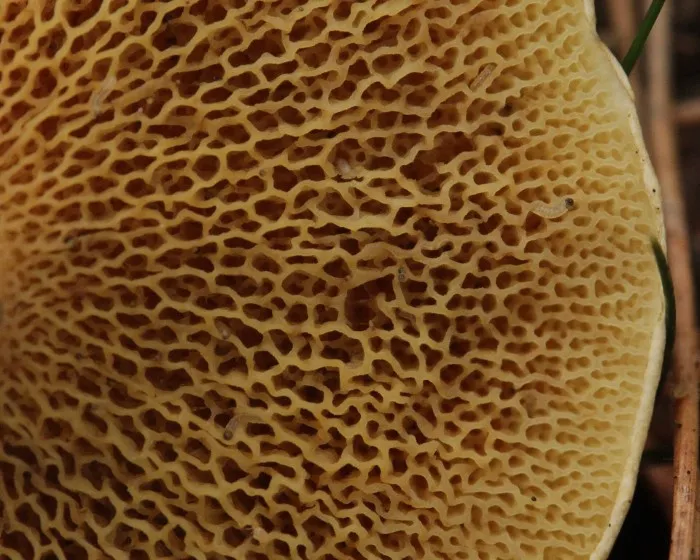
- Fertile layer: decurrent wide angular
Description
Cap: 3–10 cm across, convex when young, later spreading, with an often wavy margin. Greyish- to yellowish-brown, ochre, sometimes with a pinkish flush; slimy or sticky in wet weather, often becoming drier later.
Tubes and pores: The tubes run slightly down the stem. Pores are characteristically large, irregularly angular and often radially elongated; yellow at first, later greyish to olive-brown.
Stem: 4–7 cm tall and 0.5–1 cm thick, slender, cylindrical and usually tapering toward the base. Cap-coloured or slightly paler, smooth to finely fibrous. Ring absent.
Flesh: Whitish to pale yellow, spongy and elastic, usually unchanging when cut, rarely slowly becoming clay-pink. Smell slightly fruity and taste mild.
Spores: Spore print olive-brown. Spores 8–10 × 3.5–4.5 µm, ellipsoid to fusiform, smooth and yellowish-tinged.
Occurrence: A mycorrhizal species, chiefly under Scots pine in acidic or sandy pine woodland. It often occurs in larger groups in summer and autumn; the rose slimecap may parasitise its mycelium.
Edibility: Edible, but of moderate culinary value. Young specimens may be eaten, and drying can intensify the flavour.
Lookalikes: It resembles the ringless slippery jack, weeping bolete and slippery jack. The bovine bolete lacks a ring and has a slender stem with characteristically wide, angular, slightly decurrent pores.
Note: Among ancient Romans, suilli was a folk collective name for common, less highly regarded boletes. Bovinus means “of cattle”, referring to the yellowish-brown, leather-like cap colour and folk observations of cattle on woodland pasture.
Species description: Carl Linnaeus first described the species as Boletus bovinus in 1753. Henri François Anne de Roussel transferred it to Suillus in 1806.
Taxonomy
- PhylumBasidiomycota
- ClassAgaricomycetes
- OrderBoletales
- FamilySuillaceae
- GenusSuillus
- Species: Suillus bovinus
- Authority: (L.) Roussel (1806)
- English name: Bovine bolete
- Ecological status: mycorrhizal
- Edibility: edible
