
 I have loved mushrooms since childhood, and I have also been a programmer for a long time. Combining these two hobbies, I wrote this website. Previously, I had two other mushroom identification sites, which I sold. Only one of them remains accessible today. My goal with the current site is to create an easy-to-use search and identification platform that works great both in the field and at home. I hope it brings joy to others.
Bartha László
Species flashcards
Practice area: created for the 303-species Hungarian mushroom inspector requirement. It is not an official examination; requirements in other countries may differ.
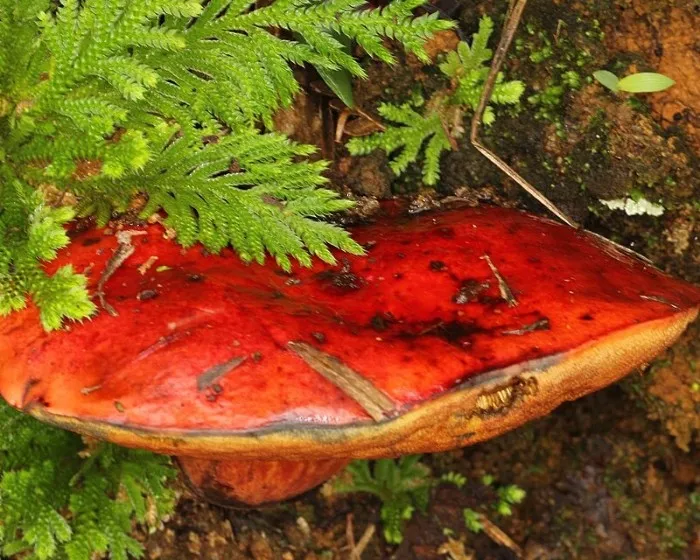
Dupain's bolete
Rubroboletus dupainii
poisonous
Protected · 10 000 Ft
- Habitat: deciduous woodland
- Fruiting season: July – October
- Cap: hemispherical convex flattening bare sticky shiny
- Stem: club-shaped cylindrical rooting reticulated granul
- Fertile layer: narrow protruding
Description
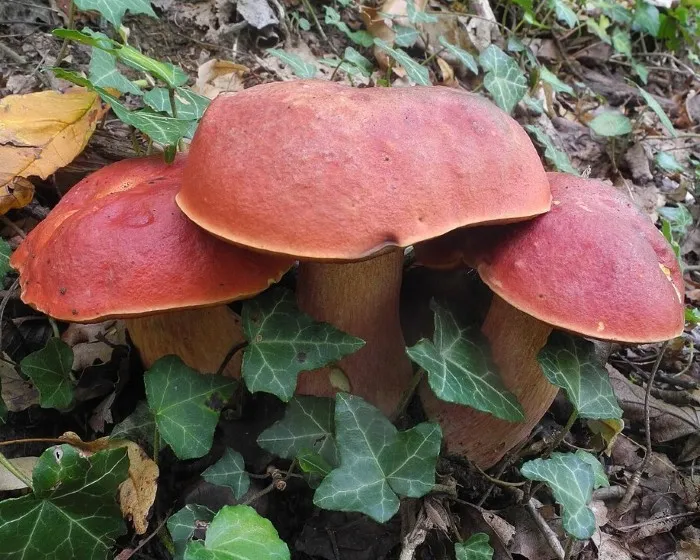
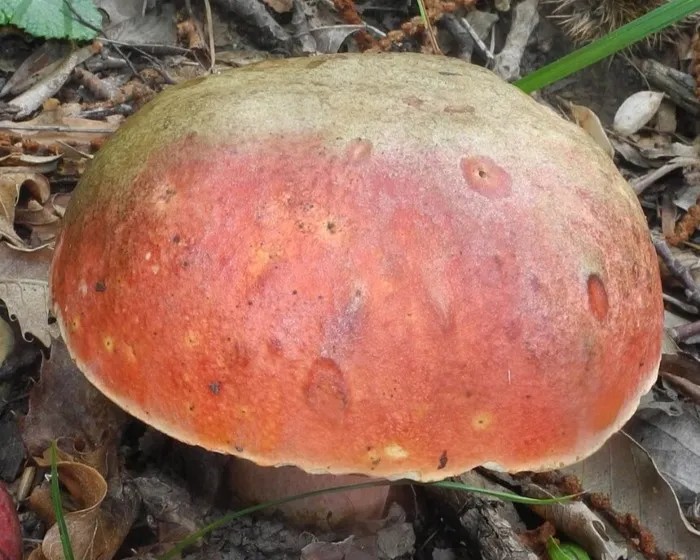
Cap: 6–10(12) cm across; hemispherical when young, later convex and flattening. Bare, sticky when wet and shiny when dry. Orange-red, blood-red to purplish red, fading somewhat in age.
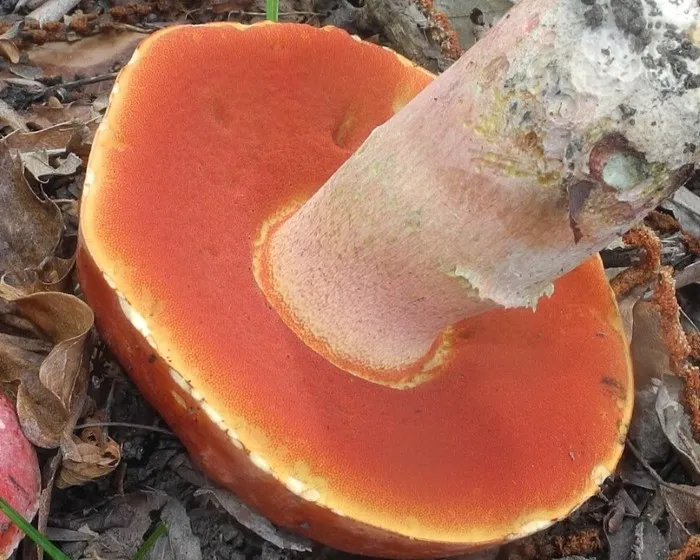
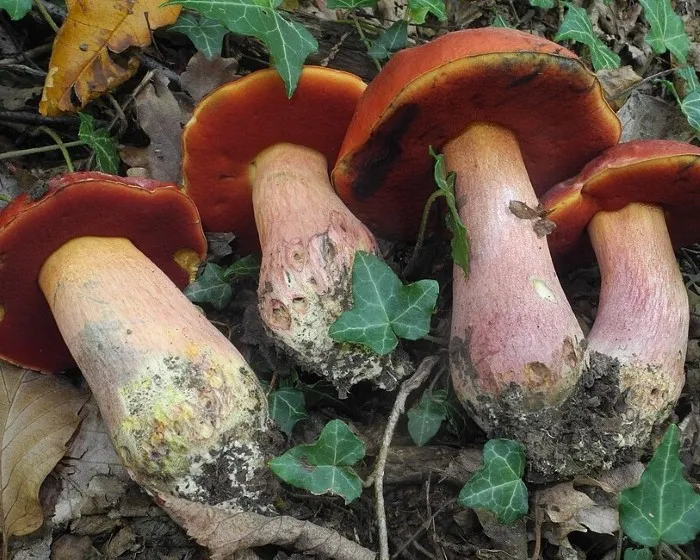
Tubes and pores: Tubes yellow, later olive-brownish. Pores narrow, orange to blood-red and protruding towards the stem in a shallow groove; strongly blueing when damaged.
Stem: 5–10 cm tall and 2–4 cm thick, club-shaped or cylindrical, slightly rooting at the base. Yellow ground colour with red granular dots, sometimes finely reticulated at the apex; bruising blue.
Flesh: Thick, firm when young and softening later, pale cream-yellow. Red-spotted in the stem base and blueing when cut. Odour pleasant, taste mild.
Spores: Spore print olive-brown. Spores fusiform, boletoid and smooth, 10–13 × 4–5.2 µm.
Occurrence: A mycorrhizal species of warm deciduous woodland on acidic soils. It occurs chiefly with oak, sweet chestnut and beech; rare.
Edibility: Treat as poisonous; especially raw specimens may cause gastrointestinal symptoms. Protected in Hungary and therefore not to be collected.
Lookalikes: It may resemble Satan's bolete, the purple bolete and the wolf bolete. The shiny bright carmine-red cap, red pores and blueing flesh are important features in combination.
Note: Rubroboletus combines Latin „ruber”, red, with the traditional genus name Boletus; it is a genus established following molecular phylogenetic studies. dupainii was given by Jean Louis Émile Boudier in honour of Victor Dupain, who contributed to the discovery of the species.
Species description: Jean Louis Émile Boudier first described the species in 1902 as Boletus dupainii. Kuan Zhao and Zhu L. Yang transferred it to Rubroboletus in 2014.
Taxonomy
- PhylumBasidiomycota
- ClassAgaricomycetes
- OrderBoletales
- FamilyBoletaceae
- GenusRubroboletus
- Species: Rubroboletus dupainii
- Authority: (Boud.) Kuan Zhao & Zhu L. Yang (2014)
- English name: Dupain's bolete
- Ecological status: mycorrhizal
- Edibility: poisonous
