
 I have loved mushrooms since childhood, and I have also been a programmer for a long time. Combining these two hobbies, I wrote this website. Previously, I had two other mushroom identification sites, which I sold. Only one of them remains accessible today. My goal with the current site is to create an easy-to-use search and identification platform that works great both in the field and at home. I hope it brings joy to others.
Bartha László
Species flashcards
Practice area: created for the 303-species Hungarian mushroom inspector requirement. It is not an official examination; requirements in other countries may differ.
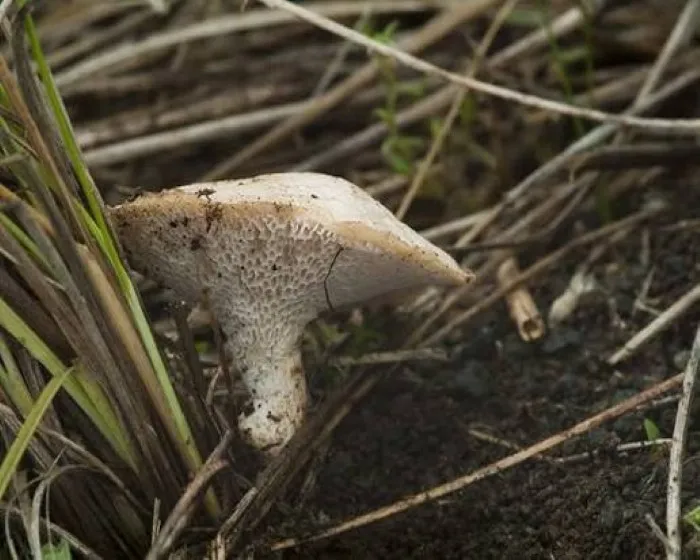
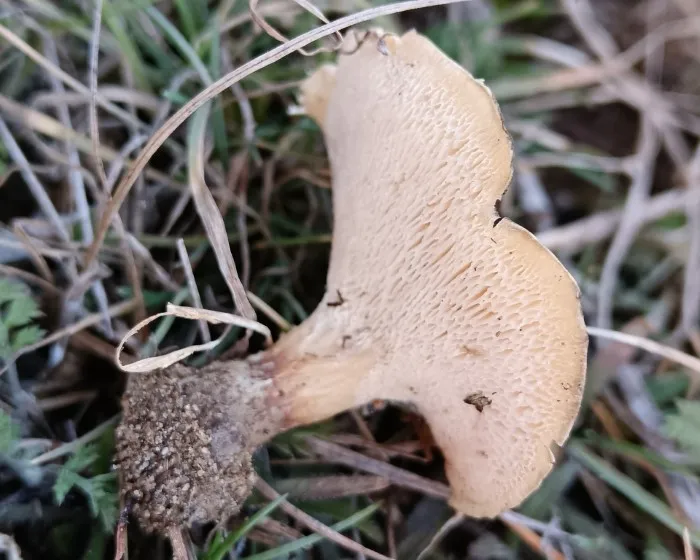
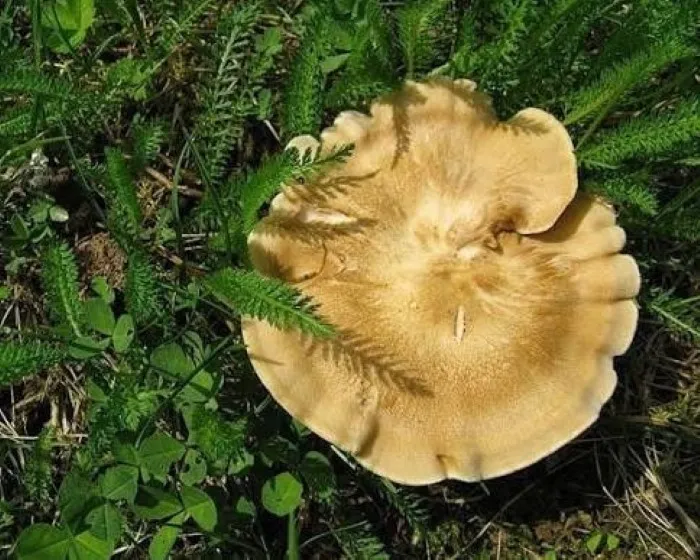
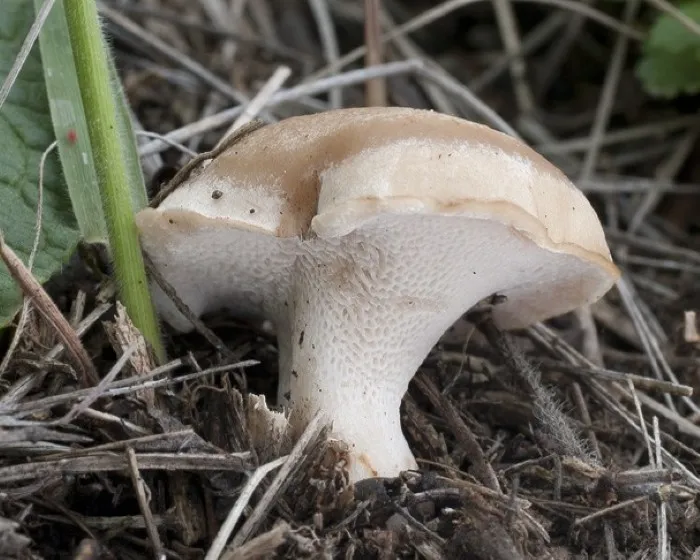
Steppe-grass polypore
Picipes rhizophilus
not edible
Protected · 5 000 Ft
- Habitat: meadow pasture
- Fruiting season: April – November
- Cap: convex flattening funnel-shaped infolded bare scaly spotted
- Stem: cylindrical curved tapering fibrous
- Fertile layer: narrow decurrent angular
Description
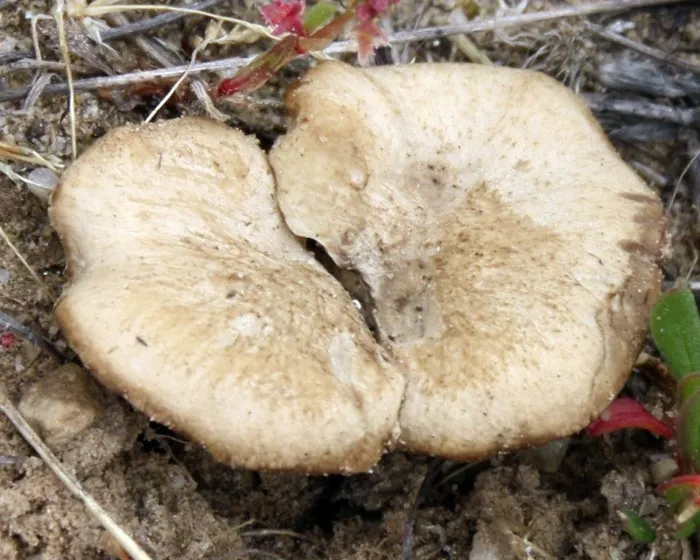
Fruiting body: The cap is 2.5–4.5 cm across; convex when young, later flattening and slightly funnel-shaped. The margin is infolded. The surface is bare, becoming slightly scaly at the centre in age and marbled-spotted when wet. Pale greyish, ochre to clay-brown.
Spore-bearing layer: Narrow, decurrent on the stem and inseparable from the cap flesh. Cream-whitish, later ochre-spotted; pores narrow and angular.
Stem: 1.5–3.2 cm tall and 0.3–0.8 cm thick, cylindrical, often curved and tapering towards the base. Finely fibrous, whitish, browning when pressed or in age.
Flesh: Thin, rubbery-elastic and tough in the stem. Whitish to cream-coloured, mildly and slightly bitterish flavoured, with a pleasant spicy smell.
Spores: Spore print white. Spores elongate ellipsoid, hyaline, 6–10 × 3–4 µm.
Occurrence: Found on open grassy sites, steppe meadows and dry grassland in spring or late autumn. It develops on decaying grass remains, including couch grass, millet, fescue and feather grass; rare.
Edibility: Not edible. Protected in Hungary and therefore not to be collected.
Lookalikes: It may resemble the black-footed polypore, but that species has a darker, often blackish stem and normally grows in woodland. The dry grassland habitat and growth on decaying grass roots are important identifiers.
Note: Picipes combines Latin „pix”, with genitive „picis”, meaning pitch or black resin, and „pes”, meaning foot; it refers to the often dark, blackish stems in the genus. rhizophilus combines Greek „rhiza”, meaning root, and „philos”, meaning loving, referring to its association with root and grass remains.
Species description: First described by Narcisse Théophile Patouillard in 1894 as Polyporus rhizophilus. Jia-Liang Zhou and Bao-Kai Cui transferred it to Picipes in 2016.
Taxonomy
- PhylumBasidiomycota
- ClassAgaricomycetes
- OrderPolyporales
- FamilyPolyporaceae
- GenusPicipes
- Species: Picipes rhizophilus
- Authority: (Pat.) J.L. Zhou & B.K. Cui (2016)
- English name: Steppe-grass polypore
- Ecological status: saprotrophic
- Edibility: not edible
