
 I have loved mushrooms since childhood, and I have also been a programmer for a long time. Combining these two hobbies, I wrote this website. Previously, I had two other mushroom identification sites, which I sold. Only one of them remains accessible today. My goal with the current site is to create an easy-to-use search and identification platform that works great both in the field and at home. I hope it brings joy to others.
Bartha László
Species flashcards
Practice area: created for the 303-species Hungarian mushroom inspector requirement. It is not an official examination; requirements in other countries may differ.

Sepia bolete
Xerocomellus porosporus
edible
- Habitat: deciduous coniferous
- Fruiting season: June – September
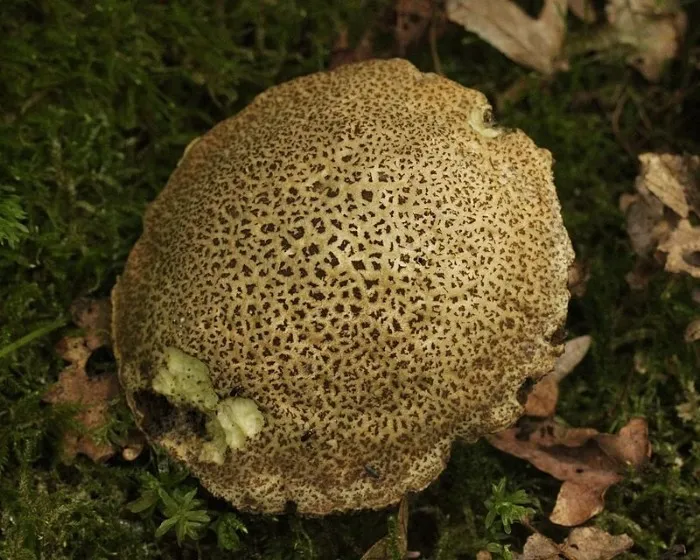
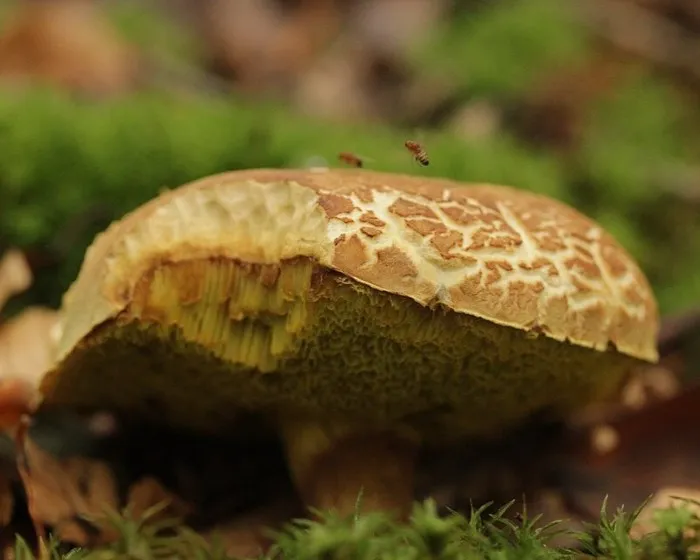
- Cap: convex spreading velvety felty cracked
- Stem: cylindrical smooth
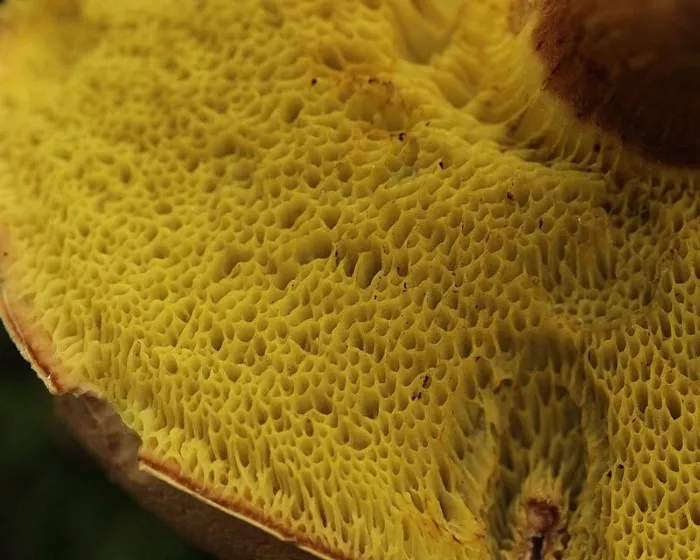
- Fertile layer: porous angular wide adnate
Description
Cap: 2–6 cm across; convex when young, later spreading. Greyish, olive-brown or brown, usually without reddish tones. The surface is finely velvety and felty, often cracking into patches; the cracks and insect-damaged areas are usually not reddish.
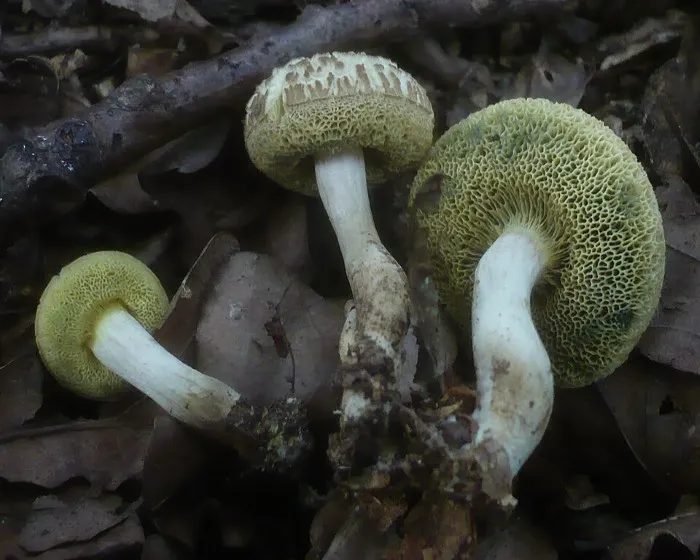
Tubes and pores: Tubes dirty yellow at first, later yellow-green. Pores wide and angular, bruising blue; adnate to the stem.
Stem: Slender, usually cylindrical and smooth, with no reddish colour. Ochre at the apex, olive-brown towards the base, becoming slightly blackish in age.
Flesh: Pale to dirty yellow, greyish ochre in the stem base. Weakly blueing when cut and softening in old specimens. Taste mild and not acidic.
Spores: Spore print olive-brown. Spores smooth and fusiform, conspicuously truncate at one end, 12–15 × 5–6 µm.
Occurrence: A mycorrhizal species, fruiting from June to September in deciduous and coniferous woodland. Chiefly with oak, but also with beech and hornbeam; common in Hungary.
Edibility: Edible, but of limited culinary value because the flesh becomes soft when cooked.
Lookalikes: It may resemble the red cracking bolete, which often shows red colouring beneath cap cracks. It is reliably separated from other suede boletes by its distinctly truncate spores.
Note: Xerocomellus is a diminutive form of Xerocomus. The name combines the Greek words „xeros”, meaning dry, and „kome”, meaning hair or tuft, referring to the often dry, felty cap surface. porosporus refers to the characteristically truncate spores.
Species description: First described by Louis Imler; the currently accepted name Xerocomellus porosporus was introduced by Josef Šutara in 2008.
Taxonomy
- PhylumBasidiomycota
- ClassAgaricomycetes
- OrderBoletales
- FamilyBoletaceae
- GenusXerocomellus
- Species: Xerocomellus porosporus
- Authority: (Imler ex G. Moreno & Bon) Šutara (2008)
- English name: Sepia bolete
- Ecological status: mycorrhizal
- Edibility: edible
