
 I have loved mushrooms since childhood, and I have also been a programmer for a long time. Combining these two hobbies, I wrote this website. Previously, I had two other mushroom identification sites, which I sold. Only one of them remains accessible today. My goal with the current site is to create an easy-to-use search and identification platform that works great both in the field and at home. I hope it brings joy to others.
Bartha László
Species flashcards
Practice area: created for the 303-species Hungarian mushroom inspector requirement. It is not an official examination; requirements in other countries may differ.
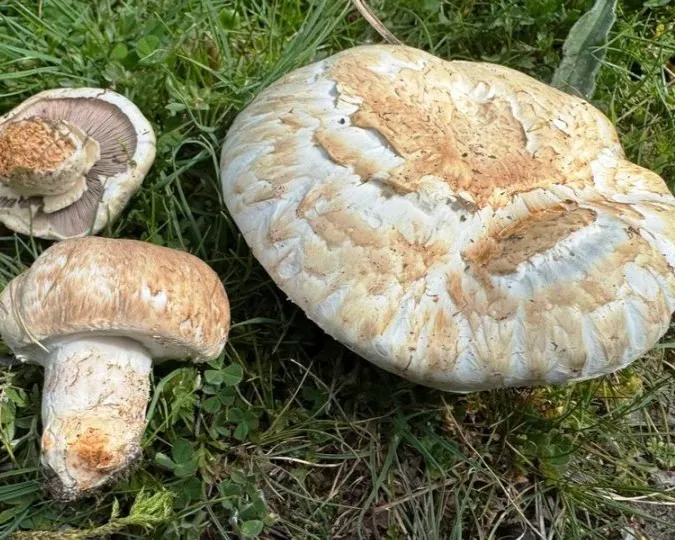
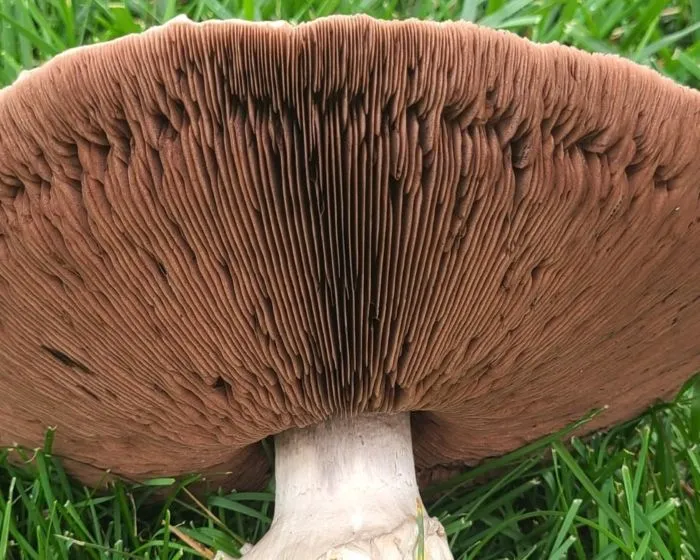
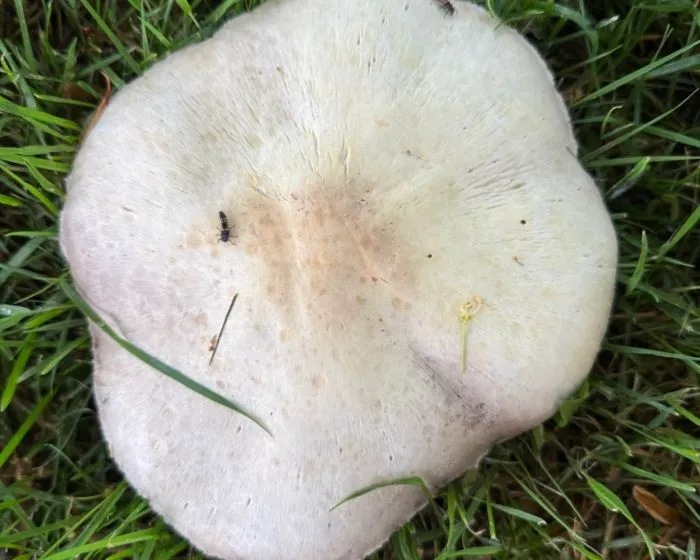
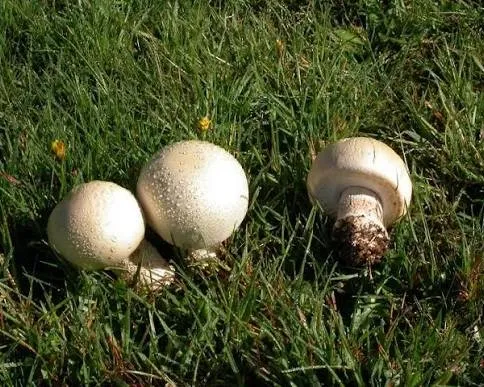
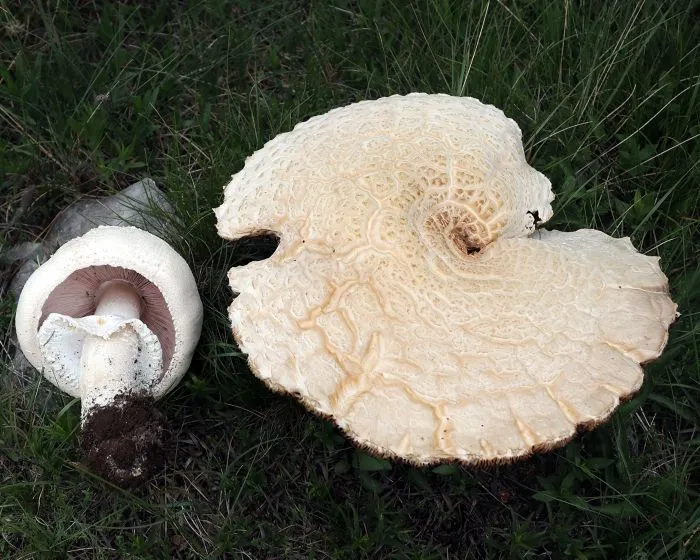
Crocodile agaricus
Agaricus crocodilinus
edible marketable
- Habitat: meadow pasture
- Fruiting season: May – October
- Cap: hemispherical spreading infolded radial scaly
- Stem: cylindrical ventricose woolly
- Fertile layer: dense free standing
Description
Cap: 10–30 cm across; hemispherical when young, soon broadly spreading. Whitish, with the margin infolded for a long time; the surface is radially fibrous or finely scaly, often resembling crocodile skin.
Gills: Dense and free. Pale pink to greyish pink when young, then purplish brown and finally dark brown.
Stem: 6–12 cm tall and up to 3.5 cm thick, stout, cylindrical or slightly ventricose, white. Often pinkish above the well-developed, hanging ring and whitish woolly below it. The lower surface of the ring has a spoke-like pattern.
Flesh: Thick, white, and may brown when cut or bruised. Pleasantly scented of anise or bitter almond, with a mild taste.
Spores: Spore print brown. Spores smooth, thick-walled, ellipsoid, 9–11 × 5–6.5 µm.
Occurrence: A saprotrophic species, chiefly in grazed meadows, fields, grassy places, woodland edges and parks. It occurs from May to October and is uncommon.
Edibility: Edible and marketable, with good culinary value. Expert identification is recommended before consumption.
Lookalikes: It resembles the horse mushroom, which is usually smaller. It may also be confused with the poisonous yellow stainer; strongly yellowing specimens with an unpleasant phenolic or ink-like smell must not be eaten.
Note: Agaricus derives from the Ancient Greek „agarikon”, a name used by Dioscorides for a fungus growing on wood. crocodilinus is a Latin adjective formed from the Greek word for crocodile, referring to the cap's scaly, crocodile-skin-like surface.
Species description: Scientifically described by William Alphonso Murrill in 1912.
Taxonomy
- PhylumBasidiomycota
- ClassAgaricomycetes
- OrderAgaricales
- FamilyAgaricaceae
- GenusAgaricus
- Species: Agaricus crocodilinus
- Authority: William Alphonso Murrill (1912)
- English name: Crocodile agaricus
- Ecological status: saprotrophic
- Edibility: edible marketable
