
 I have loved mushrooms since childhood, and I have also been a programmer for a long time. Combining these two hobbies, I wrote this website. Previously, I had two other mushroom identification sites, which I sold. Only one of them remains accessible today. My goal with the current site is to create an easy-to-use search and identification platform that works great both in the field and at home. I hope it brings joy to others.
Bartha László
Species flashcards
Practice area: created for the 303-species Hungarian mushroom inspector requirement. It is not an official examination; requirements in other countries may differ.

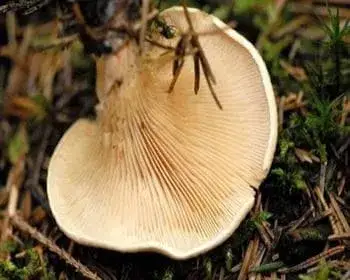
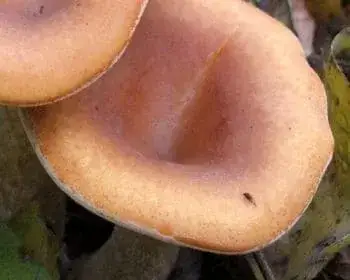
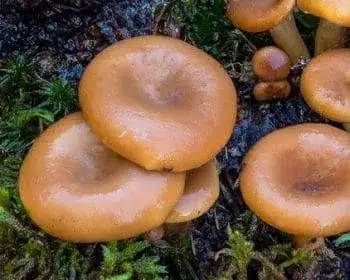
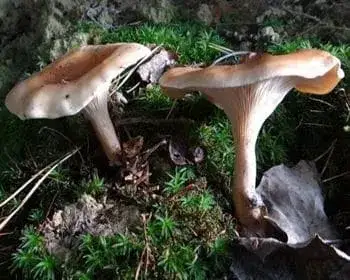
Tawny Funnel Cap
Lepista flaccida
edible
- Habitat: deciduous coniferous
- Fruiting season: August – November
- Cap: funnel-shaped smooth infolded wavy
- Stem: thickening hollow
- Fertile layer: decurrent dense smooth
Description
Cap: In mature state, the cap reaches a width of 4-8 cm. Initially convex, then depressed and finally distinctly funnel-shaped. The bare cap surface is shiny and smooth to the touch. Mostly yellowish-reddish, reddish-brown or fox-colored. It may have irregular spots. Its margin is initially infolded then becomes irregularly wavy.
Gills: The gills are densely standing, decurrent on the stem, thin and soft. Initially ivory-colored, during development turning reddish or orange-red. Easily separable from the cap flesh.
Stem: Initially solid, later becoming hollow. Mostly regular cylindrical shape, but may thicken towards the base. Color similar to the cap.
Flesh: Cream-colored, thin, characteristic mushroom smell and taste.
Spore: Whitish; 4-5 x 3.5-4 µm; almost spherical, slightly granular.
Occurrence: Often found in oak forests, acacia groves, mixed forests, and also in coniferous forests. From August to December, often growing in flushes. Sometimes even in mild January.
Edibility: Edible, but not recommended.
Confusion: Clitocybe flaccida is a thin-fleshed, deciduous forest relative of the tawny funnel cap, considered by some mycologists as a separate species. The pale yellow funnel cap has striking water spots on the top of the cap. Also similar are the jack o'lantern, the edible meadow waxcap, and the common funnel.
Note: inversa means turned inward, twisted. flaccida means loose or flabby - (opposite of firm, stiff). lepista means pitcher or goblet.
Species description: In 1799, the British naturalist James Sowerby (1757-1822) described it and named it Agaricus flaccidus, its currently accepted scientific name was given in 1887 by the French mycologist Narcisse Theophile Patouillard (1854-1926), who classified it in the Lepista genus.
Taxonomy
- PhylumBasidiomycota
- ClassAgaricomycetes
- OrderAgaricales
- FamilyTricholomataceae
- GenusLepista
- Species: flaccida
- Described by: (Sowerby) Pat.
- Hungarian name: rozsdasárga tölcsérgomba
- Lifestyle: soil saprotroph
- Edibility: edible
