
 I have loved mushrooms since childhood, and I have also been a programmer for a long time. Combining these two hobbies, I wrote this website. Previously, I had two other mushroom identification sites, which I sold. Only one of them remains accessible today. My goal with the current site is to create an easy-to-use search and identification platform that works great both in the field and at home. I hope it brings joy to others.
Bartha László
Species flashcards
Practice area: created for the 303-species Hungarian mushroom inspector requirement. It is not an official examination; requirements in other countries may differ.

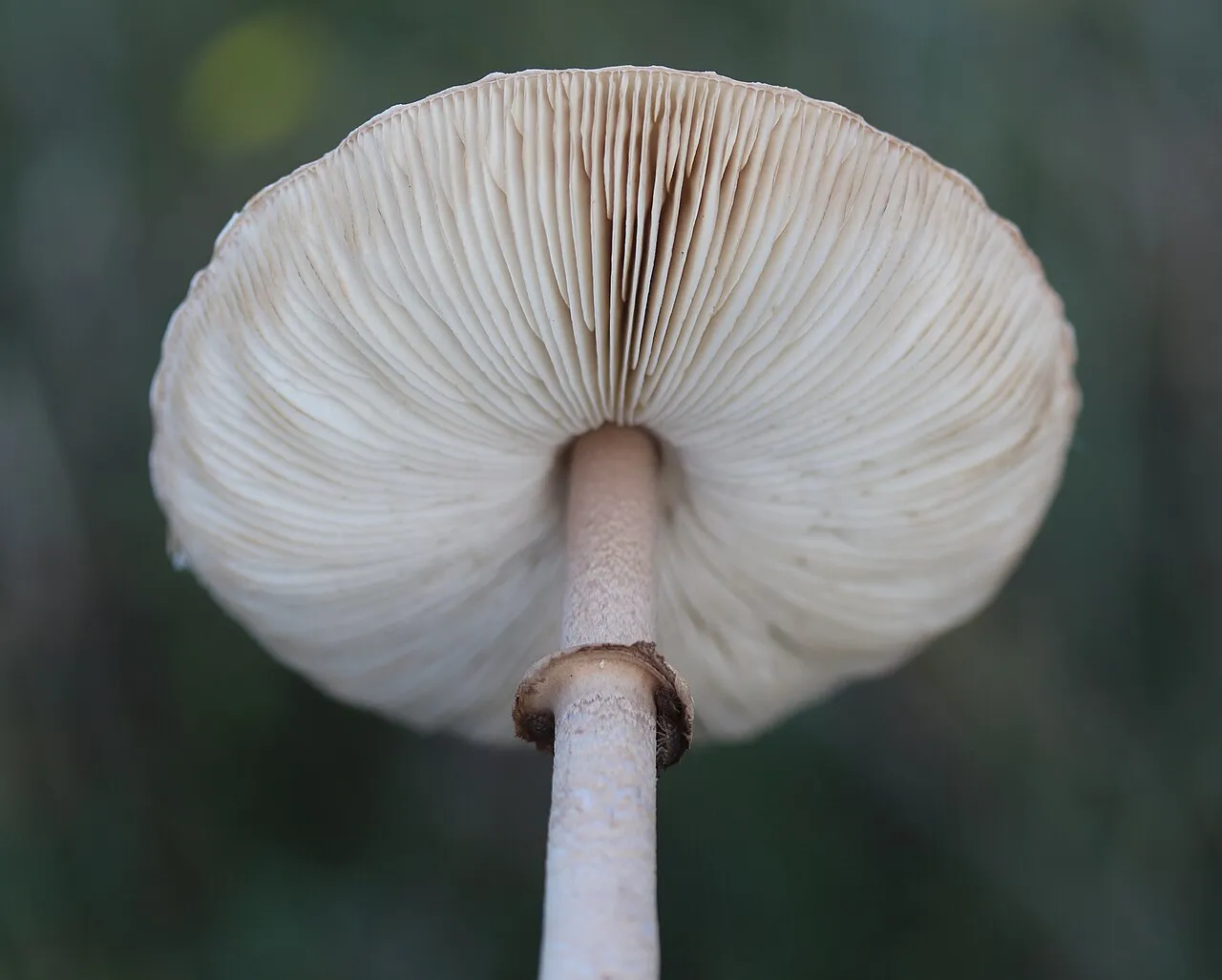
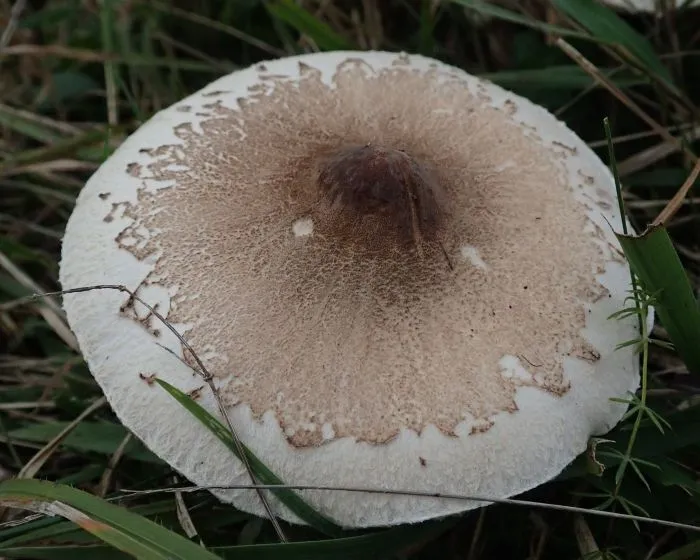
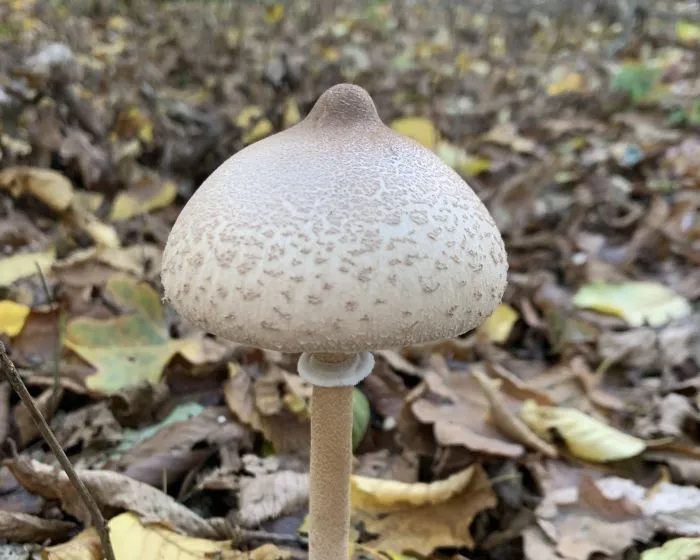
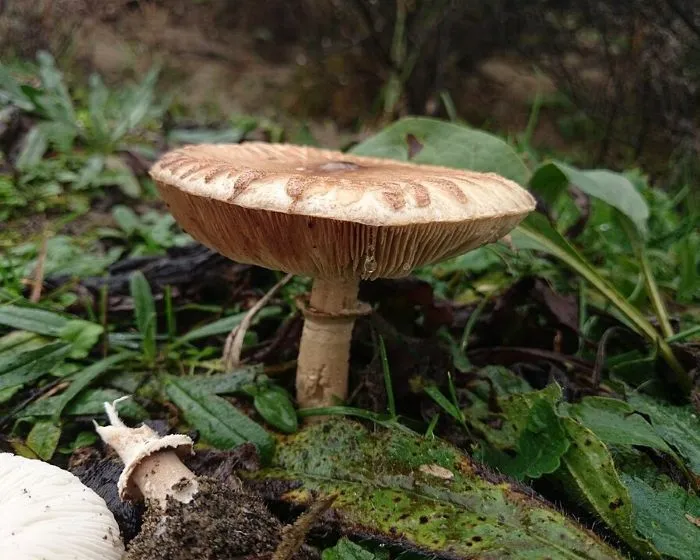
Slender Parasol
Macrolepiota mastoidea
edible
- Habitat: deciduous coniferous
- Fruiting season: May – November
- Cap: hemispherical flat pointed umbonate scaly smooth
- Stem: bulbous
- Fertile layer: free dense smooth
Description
Cap: 5-15 cm in diameter; hemispherical when young, then convex, finally flat; with a pointed umbo in the center; whitish base with brownish color, decorated with fine, fibrous scales, its umbo is darker brown, smooth.
Gills: Densely standing, free, wide, fused in a ring around the stem; cream-colored.
Stem: 10-18 cm long, 0.3-1 cm thick; slender, with a bulbous base; whitish base color with brownish, fine, marbled decoration; with a movable ring; can be hingedly detached from the cap.
Flesh: Soft in the cap, tough, fibrous in the stem; white; good taste and smell.
Spore: White or pale cream-colored; 13-16 x 8-9.5 μm; ellipsoid, smooth.
Occurrence: From May to November, in deciduous and coniferous forests, forest edges, common species.
Edibility: Edible, but only its cap.
Confusion: Similar to the poisonous stinking dapperling and flesh-brown dapperling, and the edible parasol mushroom and shaggy parasol.
Note: Always found individually, sometimes several not far from each other. The meaning of mastoidea is not entirely clear. mastoid means "several bony intercommunicating cavities in the mastoid process of the temporal bone", but another meaning referring to the nipple is more likely. The medical prefix masto means breasts. Regarding the mushroom, the latter comes to mind sooner.
Species description: Its basionym (base name) dates from 1821, when Elias Magnus Fries named it Agaricus mastoideus in the Systema Mycologia publication. Earlier, in 1801, the Danish botanist Heinrich Christian Friedrich Schumacher (1757-1830) referred to it as Agaricus umbonatus. In the early days, many mushrooms belonged to a huge agaricus genus. Since then it has been divided into numerous genera, such as the macrolepiota genus, which was further divided into additional genera in 2003.
Taxonomy
- PhylumBasidiomycota
- ClassAgaricomycetes
- OrderAgaricales
- FamilyAgaricaceae
- GenusMacrolepiota
- Species: mastoidea
- Described by: (Fr.) Singer
- Hungarian name: karcsú őzlábgomba
- Lifestyle: soil saprotroph
- Edibility: edible
