
 I have loved mushrooms since childhood, and I have also been a programmer for a long time. Combining these two hobbies, I wrote this website. Previously, I had two other mushroom identification sites, which I sold. Only one of them remains accessible today. My goal with the current site is to create an easy-to-use search and identification platform that works great both in the field and at home. I hope it brings joy to others.
Bartha László
Species flashcards
Practice area: created for the 303-species Hungarian mushroom inspector requirement. It is not an official examination; requirements in other countries may differ.

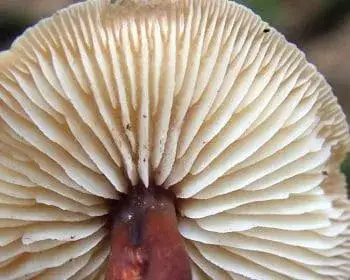
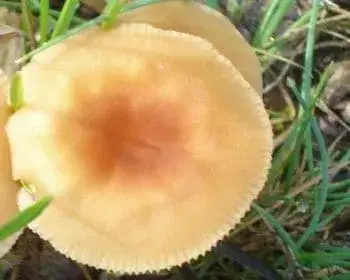
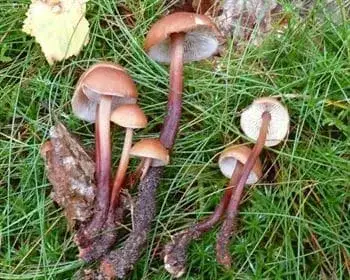
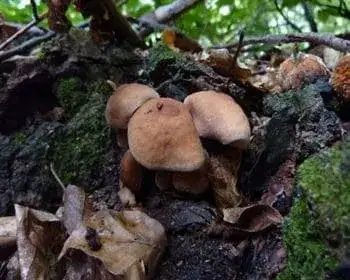
Red-stemmed Gymnopus
Gymnopus erythropus
not edible
- Habitat: deciduous stump
- Fruiting season: June – October
- Cap: flat wrinkled wavy
- Stem: cylindrical rooting
- Fertile layer: adnate tooth dense smooth
Description
Cap: 2-4 cm in diameter; initially convex, then flattening, its margin becoming wavy; ochre-brownish when wet, its center darker, reddish-brownish, lighter when dry; surface often wrinkled, uneven.
Gills: Small tooth-adnate to the stem, not densely standing, often with intermediate gills at the cap margin; whitish, cream-colored, becoming rust-spotted over time.
Stem: 7-8 cm long, 3-5 cm thick; cylindrical, often compressed surface, smooth, clustered, rooting; reddish-brown.
Flesh: Thin in the cap, fibrous in the stem; whitish; smell not characteristic, mild taste.
Spore: White; 6.5 -7.5 x 5.8 μm; elliptical, smooth.
Occurrence: From June to October; in deciduous forests, on stumps or ground, common species.
Edibility: Not edible.
Confusion: Can be confused with the bad-smelling, velvety-stemmed, not edible hairy-stemmed collybia and the lighter-stemmed, denser-gilled, edible oak-loving gymnopus.
Note: collybia means - small coin; marasmius means weakened, referring to its small fragile shape.
Species description: In 1894, Britzelm. first recorded it and gave it the name Agaricus marasmoides. Collybia marasmioides (Britz.) Brsky.& Stangl
Taxonomy
- PhylumBasidiomycota
- ClassAgaricomycetes
- OrderAgaricales
- FamilyOmphalotaceae
- GenusGymnopus
- Species: erythropus
- Described by: (Pers.) Antonín, Halling & Noordel. (1997)
- Hungarian name: vöröstönkű fülőke
- Lifestyle: soil saprotroph
- Edibility: not edible
