
 I have loved mushrooms since childhood, and I have also been a programmer for a long time. Combining these two hobbies, I wrote this website. Previously, I had two other mushroom identification sites, which I sold. Only one of them remains accessible today. My goal with the current site is to create an easy-to-use search and identification platform that works great both in the field and at home. I hope it brings joy to others.
Bartha László
Species flashcards
Practice area: created for the 303-species Hungarian mushroom inspector requirement. It is not an official examination; requirements in other countries may differ.
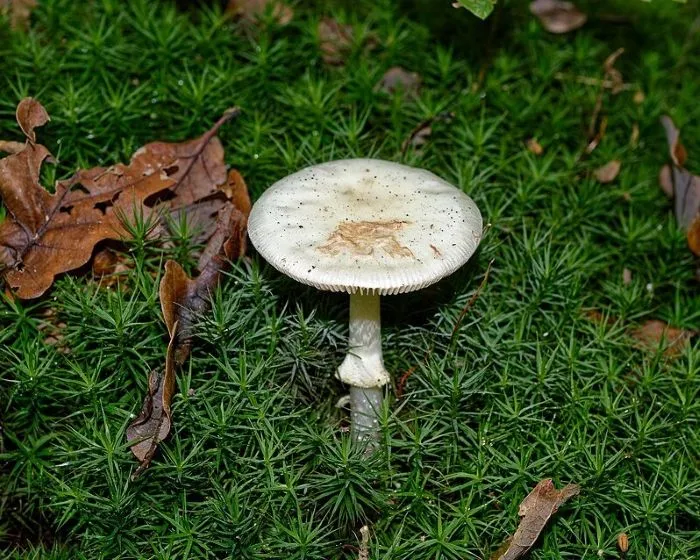
False Death Cap
Amanita citrina
poisonous
- Habitat: deciduous coniferous
- Fruiting season: July – November
- Cap: flat spotted smooth
- Stem: bulbous
- Fertile layer: free dense fringed
Description
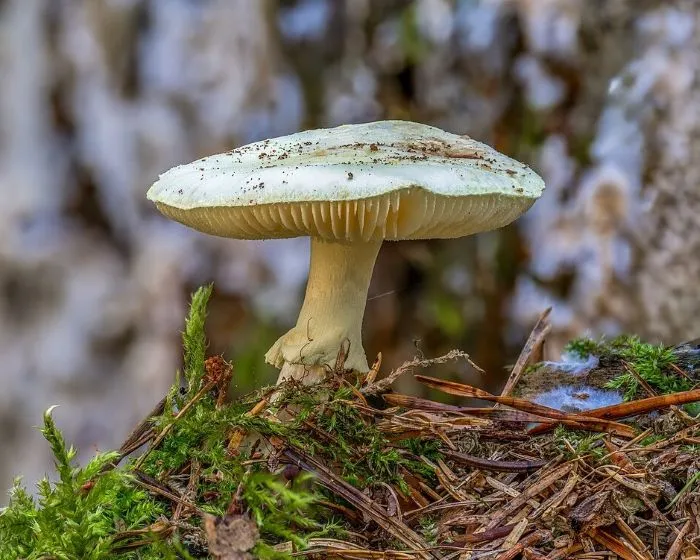
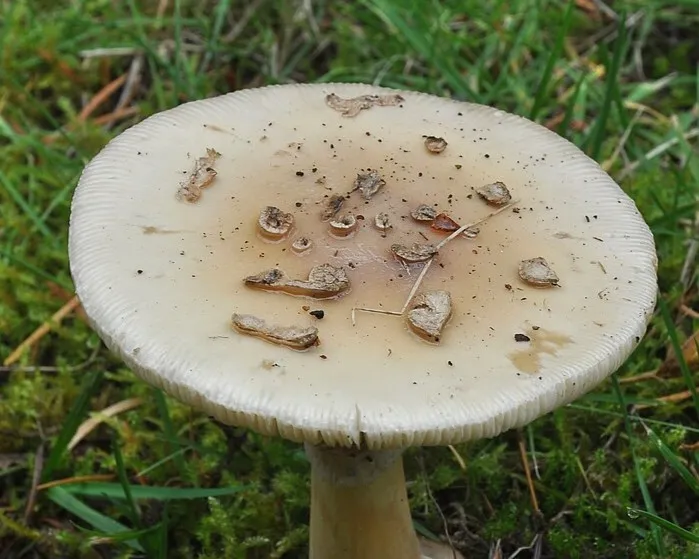
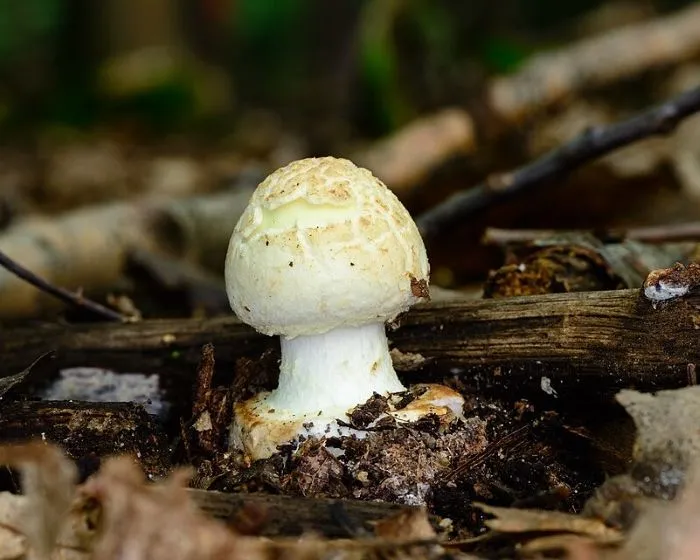
Cap: 5-15 cm wide, pale lemon yellow, rarely greenish-yellow; initially hemispherical, then later flattening, mostly covered with large, rough, yellowish veil remnants that turn slightly brown over time. The cap skin is peelable, sticky when wet, shiny, the cap margin is not grooved.
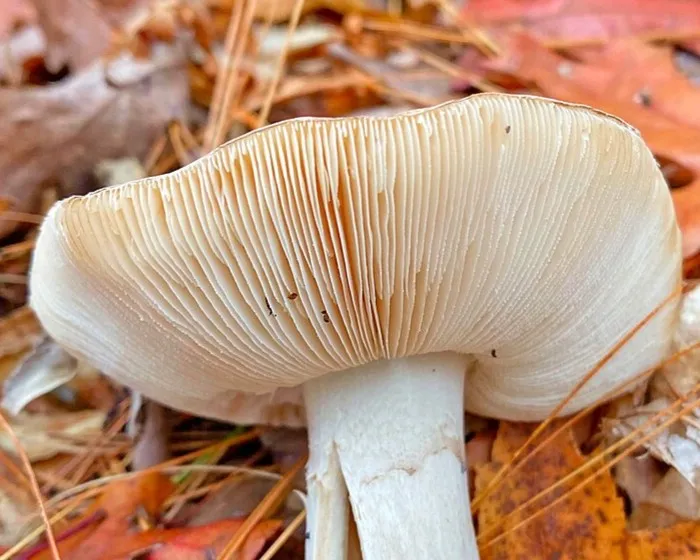
Gills: Free, whitish, slightly pale yellow, soft and densely standing, their edges slightly fringed.
Stem: Can reach 10 (12) cm in height and 1-1.5 cm in thickness, color similar to the cap. The ring is pale yellow, hanging, not grooved. The stem base is rounded bulbous, with a shelf-like rim.
Flesh: White and soft. Smell resembles sprouting potatoes, an important distinguishing feature from the death cap and the white amanita.
Spore: White; 8-10-(11) x 7-9-(10) μm; almost spherical.
Occurrence: The citron amanita is a fairly widespread mushroom species in Hungary. In Central Europe it is mainly found below 500 m altitude, but rarely can occur up to 1100 m. Similar to the death cap, the citron amanita is thermophilic, its mycelium cannot withstand hard and prolonged frost. Grows on nutrient-poor, acidic or slightly acidic soils. Forms symbiosis with the roots of coniferous and deciduous trees. Mostly occurs from July to November.
Edibility: This mushroom is not poisonous, but its unpleasant taste makes it unsuitable for consumption.
Confusion: The white variety of the citron amanita, var. alba, is most easily confused with the white variety of the death cap. The easily recognizable difference at the stem base: the death cap has a well-developed volva, while the citron amanita has a rimmed bulb.
Note: Citrina means lemon-yellow, referring to the color of the cap.
Species description: Jacob Christian Schaeffer described this mushroom in 1762 and named it Agaricus citrinus. (In early taxonomic classifications, most mushrooms were placed in one large category, Agaricus, which is now divided into several genera.) Christiaan Hendrik Persoon named it Amanita Citrina in 1797.
Taxonomy
- PhylumBasidiomycota
- ClassAgaricomycetes
- OrderAgaricales
- FamilyAmanitaceae
- GenusAmanita
- Species: citrina
- Described by: (Schaeff.) Pers.
- Hungarian name: citromgalóca
- Lifestyle: mycorrhizal
- Edibility: poisonous
