
 I have loved mushrooms since childhood, and I have also been a programmer for a long time. Combining these two hobbies, I wrote this website. Previously, I had two other mushroom identification sites, which I sold. Only one of them remains accessible today. My goal with the current site is to create an easy-to-use search and identification platform that works great both in the field and at home. I hope it brings joy to others.
Bartha László
Species flashcards
Practice area: created for the 303-species Hungarian mushroom inspector requirement. It is not an official examination; requirements in other countries may differ.

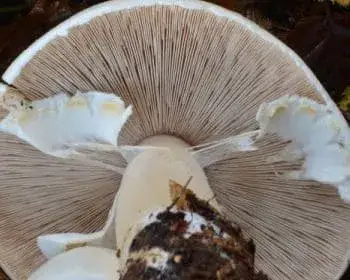
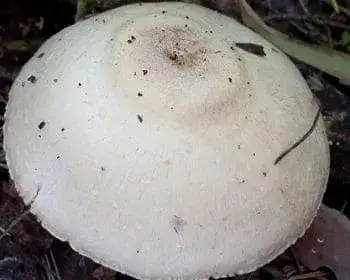
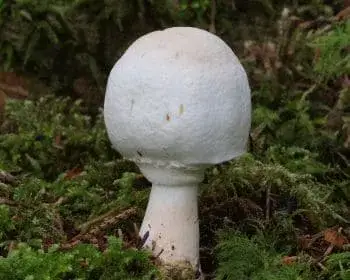
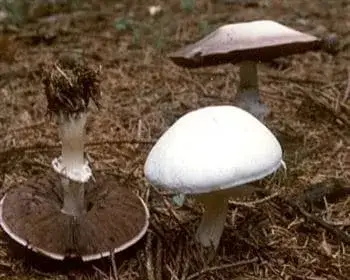
Esselte's Mushroom
Agaricus essettei
edible marketable
- Habitat: deciduous coniferous
- Fruiting season: May – November
- Cap: hemispherical flat smooth fibrous
- Stem: cylindrical thickening bulbous
- Fertile layer: free dense smooth
Description
Cap: Initially hemispherical, later spreading, up to 12 (14) cm wide, pure white cap with a blunt umbo. Its surface turns yellow on pressure.
Gills: Free and densely standing, whitish when young, then grayish-flesh-colored, finally becoming blackish-brown.
Stem: At least 12 cm tall, 0.8-2 cm thick, cylindrical, slightly tapering upwards and silky fibrous above the ring. The ring is very thin, hanging, its underside covered with membranous warts. The stem is often curved and has a characteristic rimmed bulb at the base.
Flesh: White flesh is thin in the cap, the stem is often hollow. Aniseed-smelling on pressure or cutting.
Spore: Purple-brown; 6.4-8 x 4-5.2 μm; ellipsoid.
Occurrence: The bulbous mushroom is fairly widespread. In Hungary, it is mainly found in slightly acidic soil, in deciduous and mixed forests, from June to November.
Edibility: Good edible mushroom, even if not everyone likes the aniseed smell.
Confusion: The young, still hemispherical mushroom is very similar to the white amanita. However, the latter has a pure white fruiting body, and its cap skin does not turn yellow when rubbed. Furthermore, the white amanita has a volva at the stem base. It is also very similar to the edible slender mushroom, but confusion with the latter is harmless, as it is an edible species.
Note: abruptibulbus means abruptly curved, broken. silvicola means forest-dwelling. It is quite widespread in Great Britain, Ireland and North America. It is also found throughout Europe.
Species description: The Italian obstetrician and amateur mycologist (he excelled in several sciences, as many did at the time) Carlo Vittadini (1800-1865) first described it scientifically in 1832, as Agaricus campestris var. silvicola, as at that time there was only one forest agaricus species, Agaricus campestris. In 1873, an American botanist-mycologist, Charles Horton Peck (1833-1917), named it as a separate species Agaricus silvicola.
Taxonomy
- PhylumBasidiomycota
- ClassAgaricomycetes
- OrderAgaricales
- FamilyAgaricaceae
- GenusAgaricus
- Species: essettei
- Described by: Bon
- Hungarian name: gumós csiperke
- Lifestyle: soil saprotroph
- Edibility: edible
